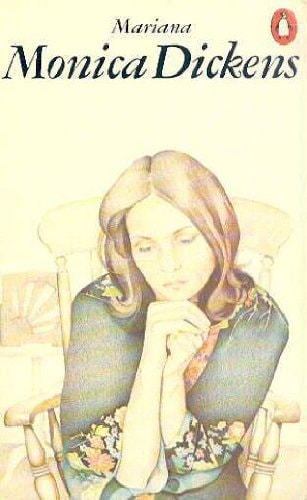
Mariana
0
0
As an Amazon Associate and affiliate partner, Menrva Books earns from qualifying purchases. Learn more
Author Description
Monica Dickens's first book, published in 1940, could easily have been called Mariana - an Englishwoman. For that is what it the story of a young English girl's growth towards maturity in the 1930s. We see Mary at school in Kensington and on holiday in Somerset; her attempt at drama school; her year in Paris learning dressmaking and getting engaged to the wrong man; her time as a secretary and companion; and her romance with Sam. We chose this book because we wanted to publish a novel like Dusty Answer, I Capture the Castle or The Pursuit of Love, about a girl encountering life and love, which is also funny, readable and perceptive; it is a 'hot-water bottle' novel, one to curl up with on the sofa on a wet Sunday afternoon. But it is more than this. As Harriet Lane remarks in her 'It is Mariana 's artlessness, its enthusiasm, its attention to tiny, telling domestic detail that makes it so appealing to modern readers.' And John Sandoe Books in Sloane Square (an early champion of Persephone Books) 'The contemporary detail is superb - Monica Dickens's descriptions of food and clothes are particularly good - and the characters are observed with vitality and humour. Mariana is written with such verve and exuberance that we would defy any but academics and professional cynics not to enjoy it.'
Menrva's Summary
THE PULSE
Mary's transition from schoolgirl to womanhood in 1930s England is defined by her navigation of social expectations, professional uncertainty, and romantic missteps. Mary seeks to establish an independent identity while moving through various environments, including a Kensington school, a Somerset holiday, and a dressmaking apprenticeship in Paris. She faces the logical constraints of her era, where class status and gender roles dictate her career options and matrimonial prospects. The narrative follows her development through a series of episodic life stages, capturing the specific anxieties and aspirations of a young woman attempting to find her place in a changing society.
INSIDE THE PAGES
- Episodic structure tracing the protagonist's growth from adolescence to adulthood
- Detailed observations of 1930s domestic life, fashion, and culinary habits
- First-person perspective providing intimate access to Mary's internal reflections
- Satirical treatment of social conventions and professional environments
- Realistic depiction of the limitations placed on young women during the interwar period
- Focus on the mundane details of daily existence as a vehicle for character development
- Use of humor to balance the protagonist's personal struggles and romantic failures
- Emphasis on the contrast between youthful idealism and the realities of adult responsibility
THE COLLECTIVE ECHO
Readers frequently highlight the novel's sharp attention to period-specific detail, noting that the descriptions of clothing and food provide a vivid sense of the 1930s. Discussion often centers on the protagonist's growth, with many observers appreciating the balance between the character's youthful enthusiasm and the more cynical realities she encounters. Critics often point to the author's ability to maintain a light, humorous tone while addressing the serious themes of independence and identity. The work is widely regarded as a perceptive study of a young woman's life, praised for its vitality and the authenticity of its domestic observations. Many readers find the narrative style accessible and engaging, making it a frequent recommendation for those interested in mid-century English fiction.
Page Count:
1
Publication Date:
1976-01-01
Publisher:
Penguin
ISBN-10:
0140007814
ISBN-13:
9780140007817
Romance
Fiction
Coming of Age
Historical
20th Century
Domestic fiction
classic
Contemporary
Community Tags
Similar Books