
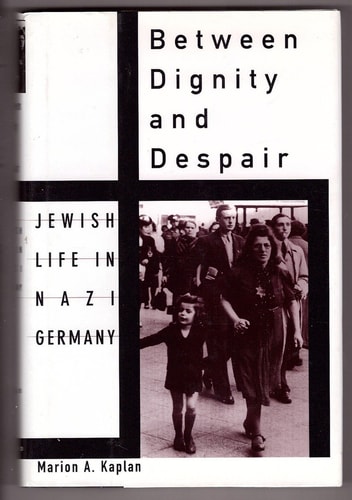
Between Dignity and Despair: Jewish Life in Nazi Germany
0
0
As an Amazon Associate and affiliate partner, Menrva Books earns from qualifying purchases. Learn more
Author Description
Between Dignity And Despair Draws On The Extraordinary Memoirs, Diaries, Interviews, And Letters Of Jewish Women And Men To Give Us The First Intimate Portrait Of Jewish Life In Nazi Germany. Kaplan Tells The Story Of Jews In Germany Not From The Hindsight Of The Holocaust, Nor By Focusing On The Persecutors, But From The Bewildered And Ambiguous Perspective Of Jews Trying To Navigate Their Daily Lives In A World That Was Becoming More And More Insane. Answering The Charge That Jews Should Have Left Earlier, Kaplan Shows That Far From Seeming Inevitable, The Holocaust Was Impossible To Foresee Precisely Because Nazi Repression Occurred In Irregular And Unpredictable Steps Until The Massive Violence Of Novemer 1938. Then The Flow Of Emigration Turned Into A Torrent, Only To Be Stopped By The War. By That Time Jews Had Been Evicted From Their Homes, Robbed Of Their Possessions And Their Livelihoods, Shunned By Their Former Friends, Persecuted By Their Neighbors, And Driven Into Forced Labor. For Those Trapped In Germany, Mere Survival Became A Nightmare Of Increasingly Desperate Options. Many Took Their Own Lives To Retain At Least Some Dignity In Death; Others Went Underground And Endured The Fears Of Nightly Bombings And The Even Greater Terror Of Being Discovered By The Nazis. Most Were Murdered. All Were Pressed To The Limit Of Human Endurance And Human Loneliness. Focusing On The Fate Of Families And Particularly Women's Experience, Between Dignity And Despair Takes Us Into The Neighborhoods, Into The Kitchens, Shops, And Schools, To Give Us The Shape And Texture, The Very Feel Of What It Was Like To Be A Jew In Nazi Germany.
Menrva's Summary
THE THESIS
This work investigates the lived experiences of Jewish individuals in Nazi Germany by centering on the daily, often ambiguous, choices made by families and women before the full-scale implementation of the Holocaust. Marion A. Kaplan, a historian specializing in German-Jewish history, utilizes a vast archive of personal documents, including diaries, letters, and oral history interviews. By shifting the focus away from the perspective of the perpetrators or the inevitability of hindsight, the book examines how ordinary people navigated the erratic and escalating nature of Nazi repression between 1933 and 1939. The argument posits that the impossibility of predicting the future made the decision to emigrate far more complex than retrospective analysis often suggests.
THE SCOPE MAP
What You Will Find
- Analysis of the domestic and social spheres, including kitchens, shops, and schools.
- Examination of the gendered experience of persecution, with a specific focus on the roles and burdens placed upon women.
- Primary source evidence derived from personal memoirs, letters, and contemporary interviews.
- A chronological study of the shifting landscape of Nazi policy from early exclusion to the violence of November 1938.
THE AUTHORITY PERSPECTIVE
Historians and scholars of the period frequently cite this text as a foundational study for understanding the social history of German Jews during the rise of the Third Reich. Readers often note the accessible yet rigorous nature of the prose, which balances academic analysis with the poignant, individual voices of those who lived through the era.
Page Count:
303
Publication Date:
1999-01-01
Publisher:
Oxford University Press, Incorporated
ISBN-10:
0195313585
ISBN-13:
9780195313581
Biography
History
Social History
Jews germany
Jewish Studies
Holocaust
Community Tags
Other Editions(2)
Similar Books