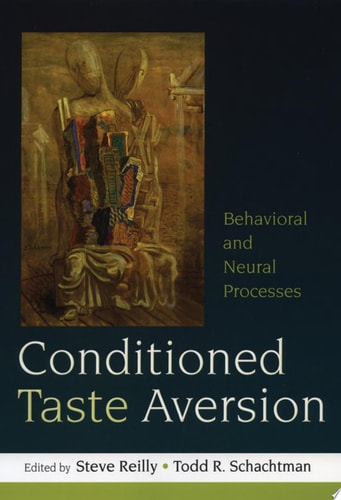
Conditioned Taste Aversion: Neural and Behavioral Processes
0
0
As an Amazon Associate and affiliate partner, Menrva Books earns from qualifying purchases. Learn more
Author Description
Conditioned taste aversion is arguably the most important learning process that humans and animals possess because it prevents the repeated self-administration of toxic food. It has not only profoundly influenced the content and direction of learning theory, but also has important human nutritional and clinical significance. In addition to its direct relevance to food selection, dietary habits, and eating disorders, it is significant for certain clinical populations that develop it as a consequence of their treatment. The study of conditioned taste aversions has invigorated new theory and research on drug conditioning and addictions, as well as on conditioned immunity. There has also been a substantial amount of recent research exploring the neural substrates of conditioned taste aversion--its neuroanatomy, pharmacology, and role in the molecular and cellular basis of plasticity.This book provides a definitive perspective on the current state of research, theory, and clinical applications for conditioned taste aversion effects and methodology. In each chapter, a leading scholar in the field presents a broad range of studies, along with current findings on the topic, highlighting both the major theoretical landmarks and the significant new perspectives. It will be an important resource for both professional and student researchers, who study conditioning, learning, plasticity, eating disorders, and dietary and ingestive behaviors in neuroscience, cognitive neuroscience, cognitive psychology, developmental psychology, clinical psychology, psychopharmacology, and medicine.
Menrva's Summary
THE THESIS
This volume investigates the fundamental mechanisms of conditioned taste aversion as a critical survival mechanism and a primary model for understanding learning, plasticity, and clinical pathology. Editors Steve S. Reilly and Todd R. Schachtman compile contributions from leading scholars to synthesize the current state of research regarding the neuroanatomy, pharmacology, and behavioral implications of this phenomenon. The text bridges the gap between basic learning theory and its practical applications in nutrition, addiction, and clinical medicine.
THE SCOPE MAP
What You Will Find
- Comprehensive analysis of the neural substrates, including neuroanatomy and molecular plasticity.
- Examination of the role of taste aversion in drug conditioning and addiction research.
- Clinical applications regarding eating disorders and treatment-induced side effects.
- Methodological frameworks for studying ingestive behaviors and dietary habits.
THE AUTHORITY PERSPECTIVE
Experts recognize this work as a foundational reference for researchers and students in cognitive neuroscience and psychopharmacology. Readers frequently note the academic density of the prose, which serves as a definitive resource for those studying the intersection of behavioral learning and biological systems.
Page Count:
592
Publication Date:
2008-10-14
Publisher:
Oxford University Press
ISBN-10:
019532658X
ISBN-13:
9780195326581
Psychology
Conditioned response
Neuroscience
Medicine
Conduct Of Life
Taste
Behavioral Science
Community Tags
Similar Books