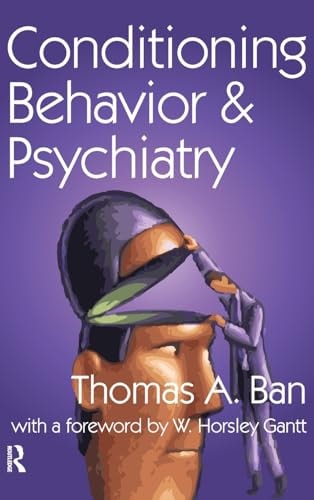
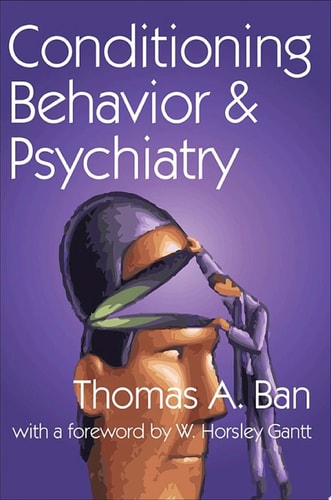
Conditioning Behavior and Psychiatry
0
0
As an Amazon Associate and affiliate partner, Menrva Books earns from qualifying purchases. Learn more
Author Description
Conditioning is one of the core methods of psychiatry. It is a behavioral method, with a stimulus-response constellation. The stimulus itself can be measured, changed, and combined, and the responses can be measured qualitatively and quantitatively. Conditioning uses the conditional reflex phenomenon. During the conditioning procedure, responses to certain stimuli are acquired where no responses existed previously. Over time behavioral conditioning expanded to include neurophysiological aspects and has been correlated with psychic manifestations. This comprehensive work deals with the conditioning method, covering fully its behavioral, neurophysiological, and psychiatric aspects.The volume is divided into five parts. Part I summarizes present-day knowledge on the neurophysiology of conditioning. Part II sets out the historical sequence in the correlation between psychopathology and pathological brain functions. Part III describes the best-known conditioning techniques applied in human testing, particularly those which are applicable for diagnostic purposes, is discussed. Part IV is concerned with clinical applications of the method and discusses the findings and the implications that it has for psychopathology and therapy or, in general, for psychiatry. Part V contains a critical evaluation of the matter presented, followed by a bibliography and index. "Conditioning Behavior and Psychiatry" describes the development of conditioning procedures since the concept was first introduced. It is primarily concerned with the analysis of elementary and complex behavioral observations, of neurophysiological and neuropathological discoveries as seen from the standpoint of psychiatric disorders. The psychiatric view presented is, not purely the Pavlovian, but a modern approach to psychiatry stemming from a Pavlovian orientation.
Menrva's Summary
THE THESIS
This work investigates the integration of conditioning methods into psychiatric practice, examining the intersection of behavioral stimulus-response models and neurophysiological manifestations. Authors Thomas A. Ban and W. Horsley Gantt synthesize historical Pavlovian foundations with modern clinical applications to provide a framework for understanding psychopathology. The text argues that conditioning serves as a measurable, objective tool for both diagnostic assessment and therapeutic intervention in psychiatric disorders.
THE SCOPE MAP
What You Will Find
- Neurophysiological mechanisms underlying the conditioning reflex
- Historical evolution of the correlation between psychopathology and brain function
- Standardized conditioning techniques utilized in human diagnostic testing
- Clinical applications of behavioral conditioning in psychiatric therapy
- Critical evaluation of the Pavlovian orientation within contemporary psychiatry
THE AUTHORITY PERSPECTIVE
Experts recognize this volume as a foundational text for understanding the transition of conditioning from laboratory observation to clinical psychiatric utility. Readers frequently note the technical density of the prose, which requires a background in behavioral science to fully synthesize the neurophysiological data presented.
Page Count:
256
Publication Date:
2008-05-15
Publisher:
Routledge
ISBN-10:
0202362353
ISBN-13:
9780202362359
Psychology
Medical
Conditioned response
Neuroscience
Behavioral Science
Psychiatry
Community Tags
Other Editions(4)

Similar Books


Reader Comments
Share Your Thoughts
No comments yet. Be the first to share your thoughts!