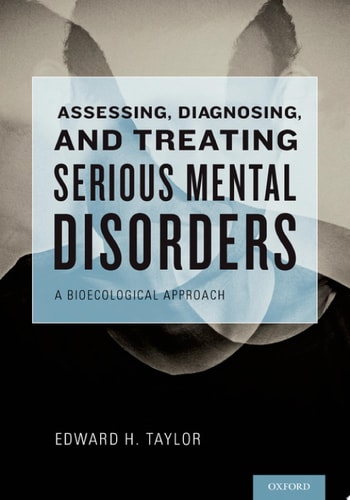
Assessing, Diagnosing, and Treating Serious Mental Disorders: A Bioecological Approach
0
0
As an Amazon Associate and affiliate partner, Menrva Books earns from qualifying purchases. Learn more
Author Description
Assessing, Diagnosing, and Treating Serious Mental Disorders uniquely provides information that is useful across mental health, psychopathology, practice, and human behavior and development classes, particularly for psychopathology and advanced mental health practice courses. DSM-IV-TR diagnostic criteria is provided for each mental disorder discussed in the textbook, and detailed comparisons to DSM-5 are included.This book represents a new wave of social work education, focusing on mental disorders as an interaction among neurobiology, genetics, and ecological social systems. Edward Taylor argues that most all mental disorders have a foundation within the person's brain that differentially interacts with the social environment. Therefore, how the brain is involved in mental disorders is covered far more comprehensively than found in most social work textbooks. However, the purpose is not to turn social workers into neuroscientists, but to prepare them for educating, supporting, and where appropriate providing treatment for, clients and families facing mental illness.Entire chapters are dedicated to explaining bioecological and other related theories, family support and intervention, and assessment methods. To help students conceptualize methods, the book includes specific steps for assessing needs, joining, and including families in mental health treatment decisions. Methods for helping families become part of the treatment team and for providing in-home interventions are highlighted. Throughout the book, professors and students can find helpful outlines and illustrations for how to understand, assess, and treat mental disorders.
Menrva's Summary
THE THESIS
This text investigates the integration of neurobiological, genetic, and ecological social systems to improve the assessment, diagnosis, and treatment of serious mental disorders. Edward H. Taylor, drawing on his expertise in social work education, argues that mental health practitioners must understand the biological foundations of disorders while maintaining a focus on the social environment. The book provides a comprehensive framework that bridges the gap between clinical neuroscience and practical social work intervention, ensuring that professionals can effectively support clients and their families.
THE SCOPE MAP
What You Will Find
- Comparative analysis of DSM-IV-TR and DSM-5 diagnostic criteria for major mental disorders.
- A bioecological theoretical framework explaining the interaction between brain function and social systems.
- Practical methodologies for assessing client needs and integrating families into the treatment process.
- Clinical guidelines for providing in-home interventions and family support strategies.
THE AUTHORITY PERSPECTIVE
Experts and educators identify this text as a foundational resource for advanced mental health practice and psychopathology courses. Readers frequently note the balance between complex neurobiological concepts and the practical, application-oriented focus required for social work professionals.
Page Count:
408
Publication Date:
2014-11-18
Publisher:
Oxford University Press
ISBN-10:
019532479X
ISBN-13:
9780195324792
Psychology
Education
Social Work
Introduction to Social WorkWelfare
Mental Illness
Mental Health
Community Tags
Similar Books