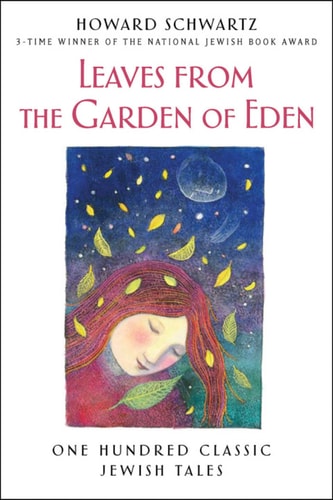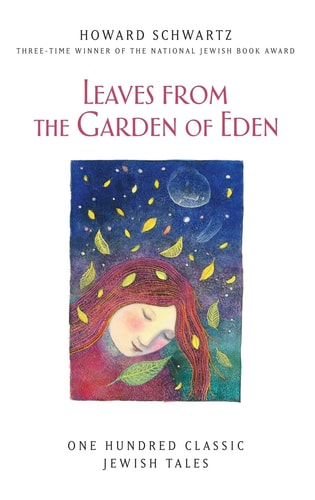
Leaves from the Garden of Eden: One Hundred Classic Jewish Tales
0
0
As an Amazon Associate and affiliate partner, Menrva Books earns from qualifying purchases. Learn more
Author Description
In Leaves from the Garden of Eden, Howard Schwartz, a three-time winner of the National Jewish Book Award, has gathered together one hundred of the most astonishing and luminous stories from Jewish folk tradition.Just as Schwartz's award-winning book Tree of Souls: The Mythology of Judaism collected the essential myths of Jewish tradition, Leaves from the Garden of Eden collects one hundred essential Jewish tales. As imaginative as the Arabian Nights, these stories invoke enchanted worlds, demonic realms, and mystical experiences. The four most popular types of Jewish tales are gathered here--fairy tales, folktales, supernatural tales, and mystical tales--taking readers on heavenly journeys, lifelong quests, and descents to the underworld. King David is still alive in the City of Luz, which the Angel of Death cannot enter, and somewhere deep in the forest a mysterious cottage contains the candle of your soul. In these stories, a bride who is not careful may end up marrying a demon, while the charm sewn into a dress may drive a pious woman to lascivious behavior. There is a dybbuk lurking in a well, a book that comes to life, and a world where Lilith, the Queen of Demons, seduces the unsuspecting. Here too are Jewish versions of many of the best-known tales, including "Cinderella," "Snow White," and "Rapunzel." Schwartz's retelling of one of these stories, "The Finger," inspired Tim Burton's film Corpse Bride.With its broad selection from written and oral sources, Leaves from the Garden of Eden is a landmark collection, representing the full range of Jewish folklore, from the Talmud to the present.
Menrva's Summary
THE PULSE
A collection of one hundred classic Jewish tales captures the breadth of a tradition defined by enchanted realms, mystical encounters, and the intersection of the human and the divine. Howard Schwartz curates a diverse array of narratives that span from the Talmudic era to modern times, organizing them into four primary categories: fairy tales, folktales, supernatural tales, and mystical tales. The stories operate within a framework where the boundaries between the physical world and the spiritual underworld are porous, often featuring protagonists who must navigate demonic threats, divine interventions, or existential quests. The narrative structure varies from oral tradition retellings to literary adaptations, maintaining a focus on the moral and imaginative weight of Jewish folklore.
INSIDE THE PAGES
- Inclusion of Jewish variants of universal fairy tales such as Cinderella and Snow White.
- Exploration of mystical themes including the City of Luz and the candle of the soul.
- Depiction of supernatural entities like dybbuks and Lilith, the Queen of Demons.
- Integration of diverse sources ranging from ancient Talmudic texts to contemporary oral traditions.
- Examination of moral dilemmas involving piety, temptation, and human fallibility.
- Use of allegorical settings to represent complex theological and philosophical concepts.
- Inclusion of specific motifs such as enchanted objects, charms, and hidden realms.
- Narrative focus on the interplay between human destiny and the influence of the demonic or divine.
THE COLLECTIVE ECHO
Readers and critics frequently highlight the collection's success in preserving the imaginative richness of Jewish storytelling traditions. Discussion often centers on the variety of the tales, noting how the book balances familiar archetypes with distinct cultural motifs that set these versions apart from standard Western fairy tales. Many observers appreciate the scholarly yet accessible tone that Schwartz employs, which makes the material approachable for general readers while maintaining its historical significance. The collection is often cited for its influence on modern media, particularly regarding the inspiration it provided for contemporary film. Readers frequently emphasize that the book serves as a comprehensive entry point for those interested in the intersection of mythology and religious history.
Page Count:
525
Publication Date:
2008-10-07
Publisher:
Oxford University Press
ISBN-10:
0195335651
ISBN-13:
9780195335651
Religion
Mythology
Short Stories
Fiction jewish
Fairy Tales
Jews
Jewish Literature
Folklore