The Origins of the Ownership Society: How the Defined Contribution Paradigm Changed America
0
0
As an Amazon Associate and affiliate partner, Menrva Books earns from qualifying purchases. Learn more
Author Description
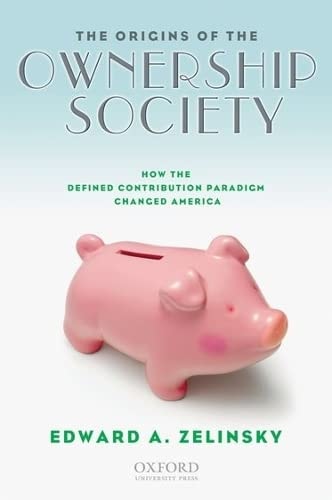
As Baby Boomers plan for their retirements, finance their children's educations, and provide for their families' medical expenses, they confront a fundamental reality: America today is a defined contribution society. We save for retirement, health care and educational savings through IRAs, 401(k) accounts, 529 programs, FSAs, HRAs, HSAs and other individual accounts which did not exist a generation ago. In its own way, the emergence of these accounts has been a revolution which has, step-by-step, without fanfare, cumulatively transformed tax and social policy in fundamental ways. The Origins of the Ownership Society describes the defined contribution revolution, its causes, and implications. For lawyers, the book provides useful insights into the network of individual accounts which are now central features of the U.S. income tax for retirement, medical, and health savings. For those concerned about public policy, the book provides useful guidance regarding our options in providing for the retirement of the mass numbers of Baby Boomers, and in preparing young Americans for the medical costs of their older years. The defined contribution format will, for good or for ill, be the framework governing the Baby Boomers' choices. For everyone else, including the Baby Boomers themselves, the book explains where we are, how and why we got there, and what our options are for the future.
Menrva's Summary
THE THESIS
This book investigates the historical and policy-driven transition of the United States from a traditional social safety net toward a 'defined contribution' model of individual financial responsibility. Edward A. Zelinsky, a professor of law and expert in tax and retirement policy, examines the proliferation of individual savings vehicles such as 401(k)s, IRAs, and HSAs. He argues that this shift represents a quiet revolution in American social policy, fundamentally altering how citizens manage retirement, education, and medical expenses. The text provides a comprehensive framework for understanding the legislative and economic forces that have institutionalized individual account-based planning.
THE SCOPE MAP
What You Will Find
- An analysis of the legislative history behind IRAs, 401(k)s, 529 plans, and health savings accounts.
- A detailed examination of how tax policy has been utilized to incentivize individual financial self-reliance.
- Case studies and policy reviews regarding the long-term implications for Baby Boomers and future generations.
- A critical assessment of the risks and benefits inherent in the shift from employer-provided benefits to individual-managed accounts.
THE AUTHORITY PERSPECTIVE
Legal and policy scholars identify this work as a foundational text for understanding the mechanics of modern American tax-advantaged savings. Readers frequently note the academic density of the prose, which serves as a rigorous resource for professionals navigating the complexities of retirement and health care policy.
Page Count:
192
Publication Date:
2007-11-12
Publisher:
Oxford University Press
ISBN-10:
0195339355
ISBN-13:
9780195339352
Economics
History
Taxation
Finance
Tax Law
Public Policy
Community Tags
Similar Books