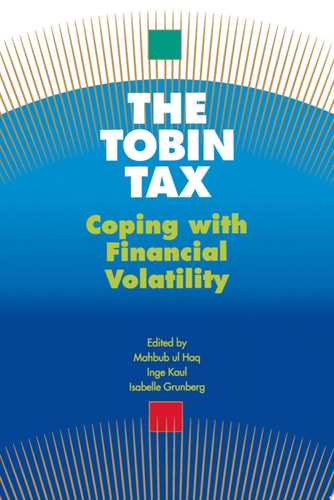
The Tobin Tax: Coping with Financial Volatility
0
0
As an Amazon Associate and affiliate partner, Menrva Books earns from qualifying purchases. Learn more
Author Description
In his 1972 Janeway Lectures at Princeton, James Tobin, the 1981 Nobel Prize winner for economics, submitted a proposal for a levy on international currency transactions. The idea was not greeted with enthusiasm, as the 1970s were a period of optimism and confidence in floating exchange rages. Yet, whenever currency crises erupted during the past decades, the proposal for a levy on international currency transactions would once again arise. In the 1990s, two additional facts have sharpened interest in the Tobin tax proposal. First is the growing volume of foreign exchange trading. Second, interest is coming not only from policymakers and experts concerned with the smooth functioning of financial markets. It is shared by those concerned with public financing of development--the fiscal crisis of the state as well as the growing need for international cooperation on problems such as the environment, poverty, peace and security.This work makes a systematic analysis of the proposal for a foreign exchange transactions levy. Its chapters examine the economic desirability of such a levy, its technical and political feasibility, its revenue potential, the possible uses of that revenue, and related administrative and institutional aspects.
Menrva's Summary
THE THESIS
This work investigates the economic, technical, and political viability of implementing a global levy on international currency transactions to mitigate financial volatility. The authors, including contributions from experts in international development and economics, analyze James Tobin's original 1972 proposal within the context of modern financial markets. They evaluate the potential for such a tax to stabilize exchange rates while simultaneously addressing the fiscal requirements of international cooperation and global development initiatives.
THE SCOPE MAP
What You Will Find
- Economic analysis of the desirability and impact of a foreign exchange transactions levy.
- Technical and administrative frameworks for implementing a global financial tax.
- Political feasibility studies regarding international cooperation and institutional requirements.
- Revenue potential projections and proposed applications for global public goods.
THE AUTHORITY PERSPECTIVE
Experts recognize this volume as a foundational text for understanding the mechanics and policy implications of the Tobin tax. Readers frequently note the academic rigor and systematic approach the authors employ to address complex issues of global financial governance.
Page Count:
336
Publication Date:
1996-01-01
Publisher:
Oxford University Press
ISBN-10:
0195344391
ISBN-13:
9780195344394
Economics
Finance
International business
International relations
Public Policy
Community Tags
Similar Books