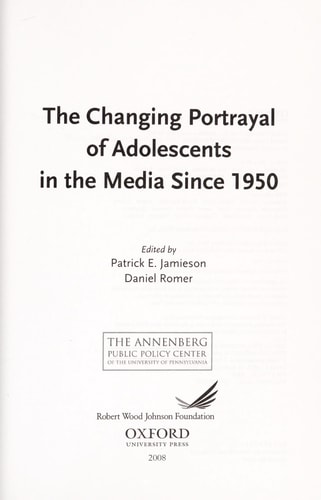
The Changing Portrayals of Adolescents in the Media Since 1950
0
0
As an Amazon Associate and affiliate partner, Menrva Books earns from qualifying purchases. Learn more
Author Description
Adolescents are eager consumers of mass media entertainment and are particularly susceptible to various forms of media influence, such as modeling, desensitization, and contagion. These once controversial phenomena are now widely accepted along with the recognition that the media are a major socializer of youth. During the economic boom of the post-World War II era, marketers and advertisers identified adolescents as a major audience, which led to the emergence of a pervasive youth culture. Enormous changes ensued in the media's portrayal of adolescents and the behaviors they emulate. These changes were spurred by increased availability and consumption of television, which joined radio, film, and magazines as major influence on youth. Later, the rapid growth of the video game industry and the internet contributed to the encompassing presence of the media. Today, opportunities for youthful expression abound to the point where adolescents can easily create and disseminate content with little control by traditional media gatekeepers. In The Changing Portrayals of Adolescents in the Media since 1950, leading scholars analyze the emergence of youth culture in music and powerful trends in gender and ethnic-racial representation, sexuality, substance use, violence, and suicide portrayed in the media. This book illuminates the evolution of teen portrayal, the potential consequences of these changes, and the ways policy-makers and parents can respond.
Menrva's Summary
THE THESIS
This book investigates how the representation of adolescents in mass media has evolved since 1950 and the subsequent impact of these portrayals on youth behavior and social development. Authors Daniel Romer and Patrick E. Jamieson, both established scholars in the field of adolescent health and media influence, synthesize research to examine the transition from post-World War II youth culture to the digital age. They argue that media acts as a primary socializer, necessitating a critical look at how portrayals of sexuality, violence, and substance use shape the developmental landscape for modern teenagers.
THE SCOPE MAP
What You Will Find
- Historical analysis of youth culture emergence from the post-World War II economic boom to the present day.
- Examination of media influence mechanisms including modeling, desensitization, and social contagion.
- Data-driven review of trends in gender, ethnic-racial representation, and risky behaviors like substance use and suicide.
- Policy-oriented frameworks for parents and educators to navigate the shift from traditional media gatekeeping to user-generated content.
THE AUTHORITY PERSPECTIVE
Experts recognize this text as a comprehensive resource for understanding the intersection of developmental psychology and media consumption. Readers frequently note the academic rigor of the research, which provides a clear foundation for those studying the long-term societal effects of media on adolescent identity.
Page Count:
480
Publication Date:
2008-07-22
Publisher:
Oxford University Press
ISBN-10:
019534295X
ISBN-13:
9780195342956
Psychology
Education
Mass media
Media Studies
Sociology
Community Tags
Similar Books