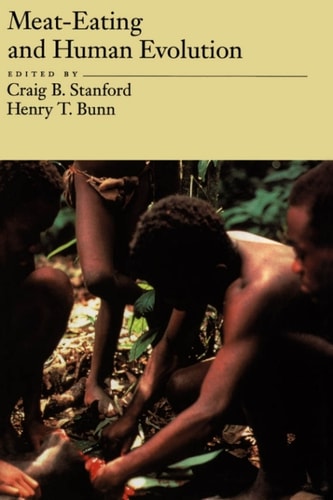
Meat-Eating and Human Evolution
0
0
As an Amazon Associate and affiliate partner, Menrva Books earns from qualifying purchases. Learn more
Author Description
When, why, and how early humans began to eat meat are three of the most fundamental unresolved questions in the study of human origins. Before 2.5 million years ago the presence and importance of meat in the hominid diet is unknown. After stone tools appear in the fossil record it seems clear that meat was eaten in increasing quantities, but whether it was obtained through hunting or scavenging remains a topic of intense debate. This book takes a novel and strongly interdisciplinary approach to the role of meat in the early hominid diet, inviting well-known researchers who study the human fossil record, modern hunter-gatherers, and nonhuman primates to contribute chapters to a volume that integrates these three perspectives. Stanford's research has been on the ecology of hunting by wild chimpanzees. Bunn is an archaeologist who has worked on both the fossil record and modern foraging people. This will be a reconsideration of the role of hunting, scavenging, and the uses of meat in light of recent data and modern evolutionary theory. There is currently no other book, nor has there ever been, that occupies the niche this book will create for itself.
Menrva's Summary
THE THESIS
This volume investigates the fundamental questions regarding when, why, and how meat consumption emerged as a critical factor in early human evolution. Editors Craig B. Stanford and Henry T. Bunn synthesize perspectives from primatology, archaeology, and ethnography to address the long-standing debate over whether early hominids were primarily hunters or scavengers. By integrating recent fossil data with modern evolutionary theory, the authors provide a comprehensive framework for understanding the dietary shifts that shaped human development.
THE SCOPE MAP
What You Will Find
- Analysis of the fossil record regarding stone tool usage and meat consumption patterns.
- Comparative studies of modern hunter-gatherer foraging behaviors.
- Observational data on the hunting ecology of wild chimpanzees.
- Interdisciplinary synthesis of biological, archaeological, and behavioral evidence.
THE AUTHORITY PERSPECTIVE
Experts recognize this volume as a foundational text for its unique interdisciplinary approach to hominid dietary evolution. Readers frequently note the academic density of the prose, which serves as a primary resource for students and researchers in the field of human origins.
Page Count:
384
Publication Date:
2001-01-01
Publisher:
Oxford University Press
ISBN-10:
0195351290
ISBN-13:
9780195351293
Science
Paleontology
Physical Anthropology
Earth Sciences
Evolution
Cultural Anthropology
Prehistoric peoples
Anthropology
Geology
Archaeology
Community Tags
Similar Books