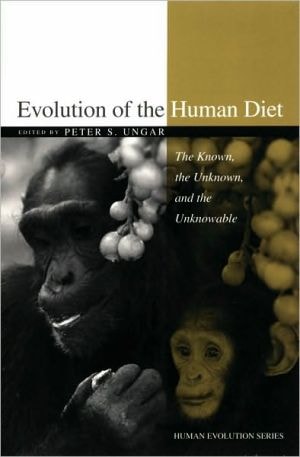
Evolution of the Human Diet: The Known, the Unknown, and the Unknowable
0
0
As an Amazon Associate and affiliate partner, Menrva Books earns from qualifying purchases. Learn more
Author Description
We are interested in the evolution of hominin diets for several reasons. One is the fundamental concern over our present-day eating habits and the consequences of our societal choices, such as obesity prevalent in some cultures and starvation in others. Another is that humans have learned to feed themselves in extremely varied environments, and these adaptations, which are fundamentally different from those of our closest biological relatives, have to have had historical roots of varying depth. The third, and the reason why most paleoanthropologists are interested in this question, is that a species' trophic level and feeding adaptations can have a strong effect on body size, locomotion, "life history strategies", geographic range, habitat choice, and social behavior. Diet is key to understanding the ecology and evolution of our distant ancestors and their kin, the early hominins. A study of the range of foods eaten by our progenitors underscores just how unhealthy many of our diets are today. This volume brings together authorities from disparate fields to offer new insights into the diets of our ancestors. Paleontologists, archaeologists, primatologists, nutritionists and other researchers all contribute pieces to the puzzle.This volume has at its core four main sections:· Reconstructed diets based on hominin fossils--tooth size, shape, structure, wear, and chemistry, mandibular biomechanics · Archaeological evidence of subsistence--stone tools and modified bones · Models of early hominin diets based on the diets of living primates--both human and non-human, paleoecology, and energetics · Nutritional analyses and their implications for evolutionary medicineNew techniques for gleaning information from fossil teeth, bones, and stone tools, new theories stemming from studies of paleoecology, and new models coming from analogy with modern humans and other primates all contribute to our understanding. When these approaches are brought together, they offer an impres
Menrva's Summary
THE THESIS
This volume investigates the evolution of hominin diets to understand how ancestral feeding adaptations shaped human biology, social behavior, and modern health outcomes. Edited by Peter S. Ungar, the text synthesizes research from paleoanthropologists, archaeologists, and nutritionists to examine the historical roots of human dietary flexibility. By integrating fossil evidence with ecological modeling, the contributors provide a comprehensive framework for analyzing how trophic levels influenced the development of early hominins.
THE SCOPE MAP
What You Will Find
- Reconstructed dietary patterns derived from hominin dental morphology, wear, and chemical analysis.
- Archaeological methodologies for interpreting stone tool usage and faunal remains.
- Comparative models utilizing modern primate behavior and human energetics to infer ancestral subsistence strategies.
- Nutritional analyses exploring the implications of evolutionary biology for contemporary health and medicine.
THE AUTHORITY PERSPECTIVE
Experts recognize this volume as a foundational interdisciplinary resource for understanding the complexities of hominin paleoecology. Readers frequently note the academic density of the prose, which effectively bridges the gap between specialized paleontological research and broader evolutionary theory.
Page Count:
0
Publication Date:
1900-01-01
Publisher:
Oxford University Press
ISBN-10:
0198040474
ISBN-13:
9780198040477
Science
Evolution
Archaeology
Anthropology
Nutrition
Paleontology
Community Tags
Other Editions(2)
Similar Books


Reader Comments
Share Your Thoughts
No comments yet. Be the first to share your thoughts!