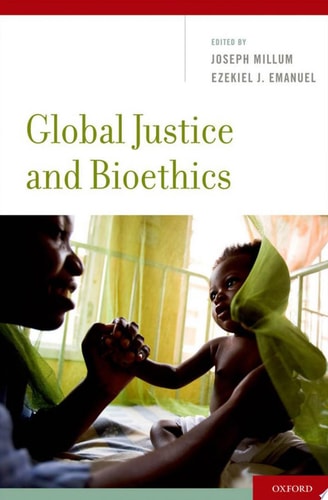
Global Justice and Bioethics
0
0
As an Amazon Associate and affiliate partner, Menrva Books earns from qualifying purchases. Learn more
Author Description
Despite the massive scale of global inequalities, until recently few political philosophers or bioethicists addressed their ethical implications. Questions of justice were thought to be primarily internal to the nation state. Over the last decade or so, there has been an explosion of interest in the philosophical issues surrounding global justice. These issues are of direct relevance to bioethics. The links between poverty and health imply that we cannot separate questions of global health from questions about fair distribution of global resources and the institutions governing the world order. Similarly, as increasing numbers of medical trials are conducted in the developing world, researchers and their sponsors have to confront the special problems of doing research in an unjust world, with corresponding obligations to correct injustice and avoid exploitation.This book presents a collection of original essays by leading thinkers in political theory, philosophy, and bioethics. They address the key issues concerning global justice and bioethics from two perspectives. The first is ideal theory, which is concerned with the social institutions that would regulate a just world. What is the relationship between human rights and the provision of health care? How, if at all, should a global order distinguish between obligations to compatriots and others? The second perspective is from non-ideal theory, which governs how people should behave in the unjust world in which we actually find ourselves. What sort of medical care should actual researchers working in impoverished countries offer their subjects? What should NGOs do in the face of cultural practices with which they deem unethical? If coordinated international action will not happen, what ought individual states to do?These questions have more than theoretical interest; their answers are of direct practical import for policymakers, researchers, advocates, NGOs, scholars, and others. This book is the first collection t
Menrva's Summary
THE THESIS
This volume investigates the intersection of global justice and bioethics, specifically questioning how moral obligations regarding health and medical research function within an inherently unequal international order. Ezekiel J. Emanuel and Joseph Millum curate a collection of essays from prominent scholars in political theory and philosophy to bridge the gap between national health policy and global resource distribution. The text evaluates the ethical responsibilities of researchers and institutions operating in developing nations, moving beyond traditional state-centric models of justice to address the practical realities of a globalized world.
THE SCOPE MAP
What You Will Find
- A dual-framework analysis contrasting ideal theory regarding global institutions with non-ideal theory for navigating current injustices.
- Ethical guidelines for conducting medical trials in impoverished regions to prevent exploitation.
- Discussions on the relationship between human rights, health care provision, and global resource allocation.
- Practical applications for policymakers, NGOs, and researchers facing cultural and systemic ethical dilemmas.
THE AUTHORITY PERSPECTIVE
Experts identify this collection as a foundational resource for scholars and practitioners navigating the complex moral landscape of international health research. Readers frequently note the academic rigor of the essays, which provide a necessary framework for addressing the practical challenges of global health equity.
Page Count:
336
Publication Date:
2012-02-29
Publisher:
Oxford University Press
ISBN-10:
019537990X
ISBN-13:
9780195379907
Ethics
Global Health
Globalization
Medical Ethics
World Health
Medical
Social justice
Bioethics
Political Philosophy
Allied Health
Community Tags
Similar Books