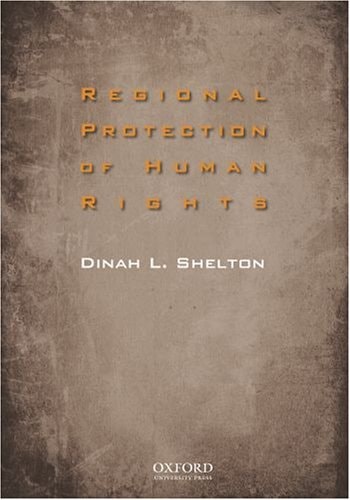
Regional Protection of Human Rights
0
0
As an Amazon Associate and affiliate partner, Menrva Books earns from qualifying purchases. Learn more
Author Description
The international protection of human rights is generally recognized as a fundamental aim of modern international law. Even a cursory review of legal systems for the protection of human rights demonstrates the rapid expansion of this field since the end of World War II. During this period, nearly all global and regional organizations have adopted human rights standards and addressed human rights violations by member states. As a consequence, no state today can claim that its treatment of those within its jurisdiction is a matter solely of domestic concern.In this book, Dinah Shelton examines the development of regional organizations and the role that human rights plays in them. It examines in particular the question of what human rights obligations states assume upon joining the regional bodies and how regional concern with human rights intersects with the global system elaborated in the context of the United Nations.This work is the first devoted to the European, Inter-American and African systems for the protection of human rights. It also discusses the prospects for regional systems in the Middle East and Asia. The Jurisprudence of the European and Inter-American Courts and decisions of the Inter-American and African Commissions are emphasized, including decisions on the interpretation and application of various human rights, procedural requirements and remedies. The book aims to expose the readers to the basic documents of each system and their inter-relationships, to enable the audience to apply those documents to ever-changing fact situations, and to alert them to the dynamic nature of regional human rights law and institutions. It also seeks to relate regional systems to national law and to the global system for the protection of human rights.Regional Protection of Human Rights illustrates how international human rights law is interpreted and implemented. The selections offer examples of political, economic and social problems as well as legal issues to show
Menrva's Summary
THE THESIS
This work investigates how regional organizations have evolved to enforce human rights standards and how these regional frameworks interact with the global United Nations system. Dinah Shelton, a recognized expert in international law, utilizes a comprehensive collection of legal documents, court jurisprudence, and commission decisions to analyze the obligations states assume upon joining regional bodies. The text provides a structured framework for understanding the intersection of domestic jurisdiction and international human rights mandates.
THE SCOPE MAP
What You Will Find
- Comparative analysis of European, Inter-American, and African human rights systems.
- Examination of emerging regional human rights prospects in the Middle East and Asia.
- Jurisprudential review of decisions from international courts and commissions.
- Methodological guidance on applying human rights documents to evolving legal fact situations.
THE AUTHORITY PERSPECTIVE
Legal scholars and practitioners frequently cite this work as a foundational text for understanding the mechanics of regional human rights enforcement. Experts highlight the text for its dense, systematic approach to interpreting international legal instruments and its utility in bridging the gap between regional and global human rights institutions.
Page Count:
1663
Publication Date:
2008-03-29
Publisher:
Oxford University Press
ISBN-10:
0195371658
ISBN-13:
9780195371659
History
International Law
Law
Human rights
Community Tags
Other Editions(3)

Similar Books














Reader Comments
Share Your Thoughts
No comments yet. Be the first to share your thoughts!