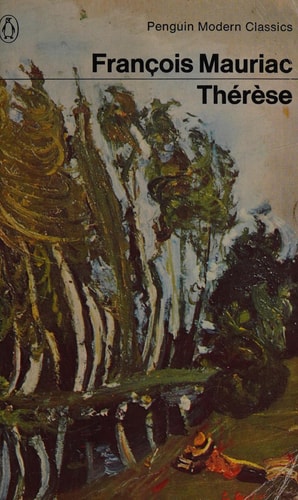
Thérèse: A Portrait in Four Parts
0
0
As an Amazon Associate and affiliate partner, Menrva Books earns from qualifying purchases. Learn more
Author Description
From the moment she walks from court having been charged with attempting to poison her husband, to her banishment, escape to Paris, and final years of solitude and waiting, the life of Thérèse Desqueyroux is passionate and tortured. The victim of a hostile fate, Thérèse, as Mauriac said of her ‘belongs to that class of human beings … for whom night can end only when life itself ends. All that is asked of them is that they should not resign themselves to night’s darkness.’ Thérèse’s moving and powerful story affirms the vitality of the human spirit, making her an unforgettable heroine.
Menrva's Summary
THE PULSE
After narrowly escaping a murder conviction for the attempted poisoning of her husband, Thérèse Desqueyroux must navigate the suffocating social and moral isolation of her provincial life. Thérèse struggles to reconcile her internal desire for autonomy with the rigid expectations of her bourgeois environment. Opposed by her husband and the judgmental gaze of her community, she seeks an escape that leads her through exile and into the anonymity of Paris. The narrative utilizes a psychological framework to examine the protagonist's internal state as she confronts the consequences of her actions and the limitations of her existence.
INSIDE THE PAGES
- Psychological exploration of guilt and moral ambiguity
- Examination of provincial social structures in early 20th-century France
- Non-linear progression through four distinct phases of the protagonist's life
- Focus on the internal monologue and existential dread
- Atmospheric depiction of the Landes region
- Themes of entrapment and the search for spiritual or personal liberation
- Character-driven narrative centered on a complex, morally grey protagonist
- Sparse, precise prose style characteristic of the author's work
THE COLLECTIVE ECHO
Readers and critics frequently highlight the clinical precision with which the author dissects the protagonist's psyche. Discussion often centers on the moral complexity of Thérèse, as she remains an elusive figure who defies simple categorization as either victim or villain. The atmosphere of the novel is consistently described as claustrophobic, reflecting the stifling nature of the social environment the protagonist inhabits. Many observers note that the pacing is deliberate, favoring deep character study over external plot developments. The work is widely regarded as a significant contribution to French psychological literature, prompting ongoing analysis regarding the nature of human freedom and social judgment.
Page Count:
320
Publication Date:
1979-01-01
Publisher:
Farrar, Straus and Giroux
ISBN-10:
0140013970
ISBN-13:
9780140013979
Drama
Psychological
classic
French literature
Community Tags
Similar Books