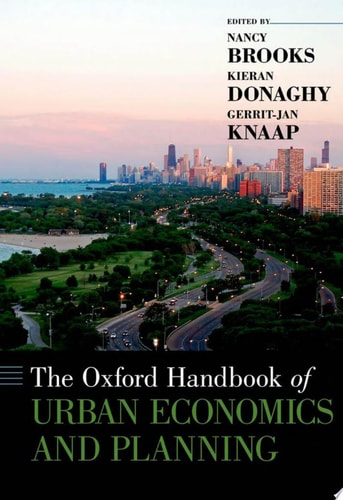
The Oxford Handbook of Urban Economics and Planning
0
0
As an Amazon Associate and affiliate partner, Menrva Books earns from qualifying purchases. Learn more
Author Description
This volume embodies a problem-driven and theoretically informed approach to bridging frontier research in urban economics and urban/regional planning. The authors focus on the interface between these two subdisciplines that have historically had an uneasy relationship.Although economists were among the early contributors to the literature on urban planning, many economists have been dismissive of a discipline whose leading scholars frequently favor regulations over market institutions, equity over efficiency, and normative prescriptions over positive analysis. Planners, meanwhile, even as they draw upon economic principles, often view the work of economists as abstract, not sensitive to institutional contexts, and communicated in a formal language spoken by few with decision making authority. Not surprisingly, papers in the leading economic journals rarely cite clearly pertinent papers in planning journals, and vice versa.Despite the historical divergence in perspectives and methods, urban economics and urban planning share an intense interest in many topic areas: the nature of cities, the prosperity of urban economies, the provision of urban services, efficient systems of transportation, and the proper allocation of land between urban and environmental uses. In bridging this gap, this book highlights the best scholarship in planning and economics that addresses the most pressing urban problems of our day and will stimulate further dialog between scholars in urban planning and urban economics.
Menrva's Summary
THE THESIS
This volume investigates the historical and methodological divide between urban economics and urban planning to determine how these disciplines can integrate to address contemporary urban challenges. The editors, Gerrit-Jan Knaap, Kieran Donaghy, and Nancy Brooks, curate a collection of scholarly contributions that bridge the gap between market-oriented economic analysis and the regulatory, normative framework of urban planning. By synthesizing these disparate fields, the text argues for a more collaborative approach to solving complex issues such as land allocation, transportation efficiency, and urban prosperity.
THE SCOPE MAP
What You Will Find
- Analysis of the historical divergence between economic theory and planning practice.
- Frameworks for integrating market institutions with regulatory urban policy.
- Case studies examining the provision of urban services and infrastructure.
- Methodologies for balancing economic efficiency with social equity in city development.
THE AUTHORITY PERSPECTIVE
Experts identify this volume as a foundational resource for scholars and practitioners seeking to reconcile the theoretical differences between urban economics and planning. Readers frequently note the academic density of the prose, which serves as a comprehensive reference for those working at the intersection of these two fields.
Page Count:
1032
Publication Date:
2011-12-15
Publisher:
Oxford University Press
ISBN-10:
0195380622
ISBN-13:
9780195380620
Economics
Reference
urban planning
Public Policy
Urban Studies
Community Tags
Similar Books