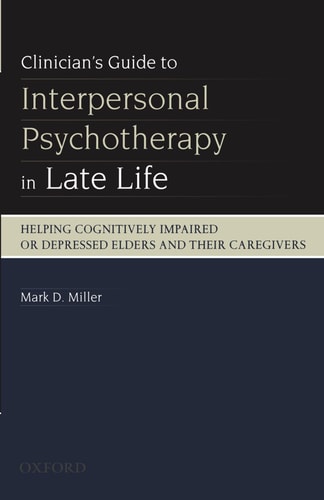
Clinician's Guide to Interpersonal Psychotherapy in Late Life: Helping Cognitively Impaired or Depressed Elders and Their Caregivers
0
0
As an Amazon Associate and affiliate partner, Menrva Books earns from qualifying purchases. Learn more
Author Description
Interpersonal Psychotherapy for Cognitive Impairment (I.P.T.-ci) aims to improve coping skills of older adults. It builds on traditional Interpersonal Psychotherapy, an evidence-based treatment that has been found useful in treating depressed elders. Cognitive impairment, a common occurrence in the older population due to disease or age-related causes of changes in brain function, calls for additional strategies to optimize functioning. I.P.T.-ci seeks to help older patients and their caregivers manage the effects of cognitive impairment, particularly in the early phase when behavior changes are often misunderstood, as well as to plan for potential future declines in cognitive functioning. Part I offers an overview of I.P.T. principles and the development of I.P.T.-ci, as well as essential background information for those new to the field of clinical geriatrics. Chapters on late-life depression, cognitive impairment/dementia, and executive function provide key points of reference for working with this population. Part II demonstrates the I.P.T.-ci approach from the initial interview through long-term follow up. Special attention is paid to the role of concerned family members or caregivers and the role transition they are going through becoming caregivers. This guide is replete with case examples, numbered for easy reference and representing a range of patients and issues. Detailed analysis clarifies the application of I.P.T.-ci elements. Clinicians will find this guide a practical resource for treating older patients and assisting their caregivers from the first visit to lifelong management.
Menrva's Summary
THE THESIS
This guide investigates how the specialized application of Interpersonal Psychotherapy for Cognitive Impairment (I.P.T.-ci) can effectively support older adults experiencing depression and cognitive decline. Author Mark D. Miller, an expert in clinical geriatrics, synthesizes evidence-based psychotherapeutic principles with practical strategies tailored for patients with brain function changes. The book provides a structured framework for clinicians to manage the complex interplay between patient symptoms and the evolving needs of their caregivers. By integrating clinical theory with actionable intervention techniques, the text aims to optimize functioning for both the individual and their support system.
THE SCOPE MAP
What You Will Find
- A comprehensive overview of I.P.T. principles adapted for late-life cognitive impairment.
- Clinical protocols for managing depression alongside dementia and executive function deficits.
- Detailed case studies illustrating the application of I.P.T.-ci from initial assessment to long-term follow-up.
- Specific strategies for addressing the role transitions and psychological burdens faced by family caregivers.
THE AUTHORITY PERSPECTIVE
Clinicians frequently identify this text as a practical, highly structured resource for navigating the complexities of geriatric mental health. Experts highlight the book's utility in bridging the gap between theoretical psychotherapy and the day-to-day realities of treating cognitively impaired elders.
Page Count:
208
Publication Date:
2009-04-21
Publisher:
Oxford University Press
ISBN-10:
0195382242
ISBN-13:
9780195382242
Psychology
Older people
Geriatrics
Mental Health
Psychotherapy
Community Tags
Similar Books