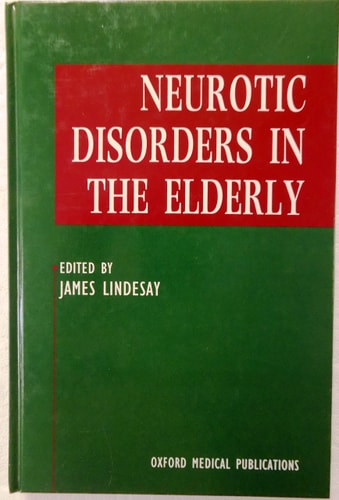
Neurotic Disorders in the Elderly
0
0
As an Amazon Associate and affiliate partner, Menrva Books earns from qualifying purchases. Learn more
Author Description
Product DescriptionCurrent psychiatric research is dominated by taxonomies that emphasize the discontinuities and differences between diseases rather than continuities and similarities. The authors of this book posit the view that much more can be learned from taking a broad, dimensional view of neurotic disorders in elderly people rather than by adopting the narrow, categorical approach of, for example, the DSM classifications. To this end the book is organized by areas of interest: epidemiology; clinical assessment and diagnosis; the clinical relationship with physical ill-health; psychosocial factors; psychological treatment, both behavioral and dynamic; and physical treatments. In addition there are chapters on personality, alcohol and drug abuse, eating disorders, sex, and sleep in the elderly. Disturbances and disorders in these areas frequently aggravate and complicate neurotic disorders in old age, and it is important that they are considered in this context.The development of comprehensive community psychogeriatric services is increasingly bringing neurotic disorders in elderly people to professional notice, and consequently there is a need for a much better understanding of their diagnosis and management. This book will help any psychiatrist improve their skills in this area and improve the quality of care they provide their elderly patients.Review`it is... timely and pertinent that we have a book such as this which brings totgether the current state of the subject... I think this is a very helpful and interesting book which provides a useful up-to-date review of the area and hopefully will act as a stimulus for future researchers.' Martin Orrell, Behaviour Research and Therapy, Vol. 35, no. 3, 1997About the AuthorJames Lindesay, Professor of Psychiatry for the Elderly, University of Leicester.
Menrva's Summary
THE THESIS
This book investigates whether a dimensional, broad-spectrum approach to neurotic disorders in the elderly provides more clinical utility than the narrow, categorical taxonomies found in standard diagnostic manuals like the DSM. James Lindesay, a Professor of Psychiatry for the Elderly, synthesizes clinical research and psychiatric practice to argue that understanding the continuities of neurotic conditions is essential for effective geriatric care. By moving beyond rigid disease classifications, the text provides a framework for integrating psychosocial, physical, and psychological factors in the treatment of older patients.
THE SCOPE MAP
What You Will Find
- Comprehensive analysis of epidemiology, clinical assessment, and diagnostic methodologies.
- Examination of the intersection between physical ill-health and neurotic symptoms.
- Discussion of specialized topics including personality, substance abuse, sleep disturbances, and sexual health in the elderly.
- Evaluation of both behavioral and dynamic psychological treatment modalities alongside physical interventions.
Scope Limits
- The text focuses primarily on the clinical management of neurotic disorders and does not provide an exhaustive guide to neurodegenerative diseases like dementia.
- The research reflects the psychiatric landscape of the late 1990s and may not incorporate the most recent advancements in pharmacological or digital therapeutic interventions.
THE AUTHORITY PERSPECTIVE
Experts and reviewers in the field of geriatrics have identified this work as a timely and pertinent synthesis of the subject matter. Professionals frequently cite the book as a helpful resource for improving diagnostic skills and clinical management strategies within community psychogeriatric services.
Page Count:
250
Publication Date:
1995-01-15
Publisher:
Oxford University Press
ISBN-10:
0192623966
ISBN-13:
9780192623966
Psychology
Mental Health
Neuroses
Older people
Psychiatry
Geriatrics
Community Tags
Similar Books