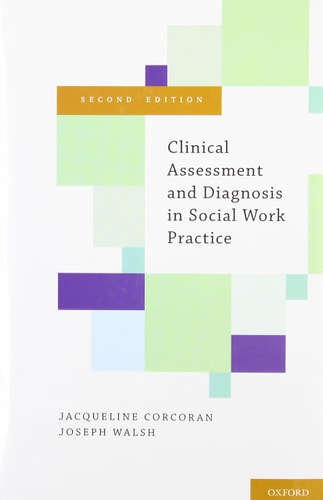
Clinical Assessment and Diagnosis in Social Work Practice
0
0
As an Amazon Associate and affiliate partner, Menrva Books earns from qualifying purchases. Learn more
Author Description
This revolutionary, user-friendly textbook not only guides social workers in developing competence in the DSM system of diagnosis, it also assists them in staying attuned during client assessment to social work values and principles: a focus on client strengths, concern for the worth and dignity of individuals, appreciation of environmental influences on behavior, and commitment to evidence-informed practice.The authors, seasoned practitioner-scholars, provide an in-depth exploration of fourteen major mental disorders that social workers commonly see in practice, including anxiety disorders, depression, bipolar disorder, and schizophrenia. They skillfully integrate several perspectives in order to help practitioners meet the challenges they will face in client assessment. A risk and resilience framework helps social workers understand environmental influences on the emergence of mental disorders and the strengths that clients already possess. Social workers will also learn to apply critical thinking to the DSM when it is inconsistent with social work values and principles. Finally, the authors catalog the latest evidence-based assessment instruments and treatments for each disorder so that social workers can intervene efficiently and effectively, using the best resources available.Students and practitioners alike will appreciate the wealth of case examples, evidence-based assessment instruments, treatment plans, and new social diversity sections that make this an essential guide to the assessment and diagnostic processes in social work practice.
Menrva's Summary
THE THESIS
How can social workers effectively integrate the DSM diagnostic system with the core values and strengths-based principles of the social work profession? The authors, Jacqueline Corcoran and Joseph Walsh, utilize their extensive experience as practitioner-scholars to bridge the gap between clinical diagnosis and social work ethics. They present a framework that balances the necessity of diagnostic competence with a commitment to evidence-informed practice and an appreciation for environmental influences on human behavior.
THE SCOPE MAP
What You Will Find
- Detailed clinical exploration of fourteen major mental disorders, including anxiety, depression, bipolar disorder, and schizophrenia.
- A risk and resilience framework for evaluating environmental impacts on client mental health.
- Practical application of critical thinking to reconcile DSM criteria with social work values.
- A comprehensive catalog of evidence-based assessment instruments and treatment planning strategies.
THE AUTHORITY PERSPECTIVE
Practitioners and students frequently identify this text as a foundational resource for navigating the intersection of clinical diagnosis and social work practice. Experts highlight the inclusion of case examples and social diversity sections as particularly effective for applying theoretical knowledge to real-world clinical scenarios.
Page Count:
528
Publication Date:
2010-03-01
Publisher:
Oxford University Press
ISBN-10:
0195398866
ISBN-13:
9780195398861
Psychology
Politics
Mental Illness
Social Work
Mental Health
Social service
textbook
Kindle eBooks
Kindle Store
Categories
Diagnosis
Community Tags
Similar Books