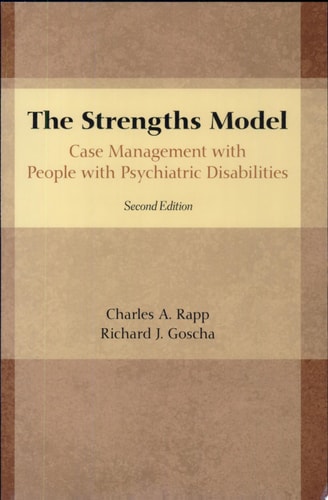
The Strengths Model: Case Management with People with Psychiatric Disabilities
0
0
As an Amazon Associate and affiliate partner, Menrva Books earns from qualifying purchases. Learn more
Author Description
Much has occurred since the publication of the first edition of this classic textbook. Recovery from psychiatric disabilities has become the new vision for mental health services. It has placed a new eminence on consumer resiliency, choice, self-determination, shared decision-making, and empowerment. Implementing evidence-based services has become a major focus of service system reform internationally.The Strengths Model, Second Edition firmly grounds the strengths model of case management within the recovery paradigm and details evidence-based guidelines for practice. In clear language the authors describe the conceptual underpinnings, theory, empirical support, principles, and practice methods that comprise the strengths model of case management. A chapter on the organizational structure and management methods necessary for successful implementation of the model make this a valuable tool for trainers, supervisors, and quality assurance personnel.This thoroughly updated edition reflects the dynamic nature of the strengths model. Practice methods have been added and refined and more detailed descriptions provided. Practice tools have been improved and new ones, like the Strengths Model Fidelity Instrument, added. New case vignettes have been added to give the reader a vivid picture of the methods in actual practice. A user-friendly guide for students and professionals, The Strengths Model remains the only book available that systematically translates the ideas and conceptions about the strengths model into a set of empirically derived practices for people with psychiatric disabilities.
Menrva's Summary
THE THESIS
This book investigates how the strengths model of case management can be effectively applied to support individuals recovering from psychiatric disabilities within a modern mental health framework. The authors, Charles A. Rapp and Richard J. Goscha, leverage their extensive expertise in social work and mental health services to bridge the gap between theoretical recovery paradigms and practical, evidence-based clinical application. By emphasizing consumer choice, self-determination, and empowerment, the text provides a structured methodology for practitioners to move beyond traditional deficit-based models. It serves as a comprehensive guide for integrating these principles into daily service delivery and organizational management.
THE SCOPE MAP
What You Will Find
- Theoretical foundations and empirical support for the strengths-based approach to mental health care.
- Practical guidelines for implementing the Strengths Model Fidelity Instrument in clinical settings.
- Detailed case vignettes illustrating the application of specific practice methods with diverse clients.
- Organizational management strategies designed to support supervisors and quality assurance personnel in service reform.
THE AUTHORITY PERSPECTIVE
Experts and practitioners recognize this text as a foundational resource for understanding the practical implementation of recovery-oriented mental health services. Readers frequently note that the book provides a clear, systematic bridge between complex theoretical concepts and the day-to-day realities of case management.
Page Count:
320
Publication Date:
2006-03-09
Publisher:
Oxford University Press
ISBN-10:
0195182855
ISBN-13:
9780195182859
Politics
Non-Fiction
Psychology
Kindle eBooks
Kindle Store
Mental Illness
Mental Health
Categories
Medicine
Social Work