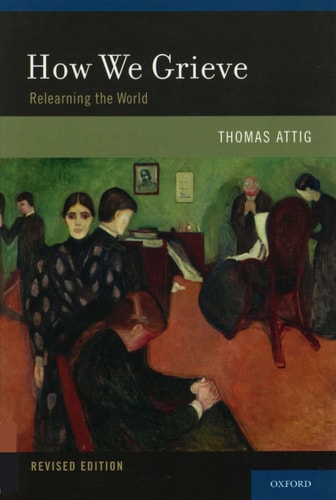
How We Grieve: Relearning the World
0
0
As an Amazon Associate and affiliate partner, Menrva Books earns from qualifying purchases. Learn more
Author Description
If we wish to understand loss experiences we must learn details of survivors' stories. The new version of How We Grieve: Relearning the World tells in-depth tales of survival to illustrate the poignant disruption of life and suffering that loss entails. It shows how through grieving we overcome challenges, make choices, and reshape our lives. These intimate treatments of coping with loss address the needs of grieving people and those who hope to support and comfort them. The accounts promote understanding of grieving itself, encourage respect for individuality and the uniqueness of loss experiences, show how to deal with helplessness in the face of "choiceless" events, and offer guidance for caregivers.The stories make it clear that grieving is not about living passively through stages or phases. We are not so alike when we grieve; our experiences are complex and richly textured. Nor is grieving about coming down with "grief symptoms". No one can treat us to make things better. No one can grieve for us.Grieving is instead an active process of coping and relearning how to be and how to act in a world where loss transforms our lives. Loss forces us to relearn things and places; relationships with others, including fellow survivors, the deceased, even God; and our selves, our daily life patterns, and the meanings of our life stories.This revision adds an introductory essay about developments in the author's thinking about grieving as "relearning the world." It highlights and clarifies its most distinctive and still salient themes. It elaborates on how his thinking about these themes has expanded and deepened since the first edition. And it places his treatment of those themes in the broader context of current writings on grief and loss.
Menrva's Summary
THE THESIS
How does the process of grieving function as an active, transformative engagement with a world fundamentally altered by loss? Thomas Attig, a philosopher and grief counselor, argues against the passive 'stage' model of grief, proposing instead that individuals must actively relearn their environment, their relationships, and their own identities following a significant loss. By integrating philosophical inquiry with clinical observation, Attig provides a framework that emphasizes personal agency and the unique, subjective nature of the mourning process.
THE SCOPE MAP
What You Will Find
- In-depth case studies and personal narratives of survivors navigating diverse loss experiences.
- A philosophical framework defining grief as the active 'relearning' of one's world.
- Practical guidance for caregivers and support systems to better assist the bereaved.
- Analysis of the intersection between personal identity, daily routines, and the meaning of life stories after trauma.
THE AUTHORITY PERSPECTIVE
Experts and clinicians frequently cite this work as a foundational text for moving beyond rigid, stage-based models of grief. Readers often note the accessible yet profound nature of the prose, which balances academic rigor with deep empathy for the grieving process.
Page Count:
264
Publication Date:
2010-11-04
Publisher:
Oxford University Press
ISBN-10:
019539769X
ISBN-13:
9780195397697
Non-Fiction
Psychology
Medical
Mental Health
Psychological aspects
Grief
Allied Health
Self Help
Bereavement
Community Tags
Similar Books