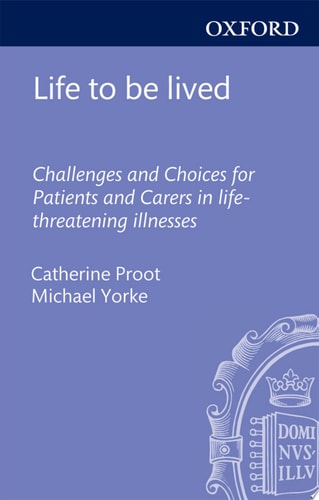
Life to Be Lived: Challenges and Choices for Patients and Carers in Life-Threatening Illnesses
0
0
As an Amazon Associate and affiliate partner, Menrva Books earns from qualifying purchases. Learn more
Author Description
How Do People Face Life-limiting Illness And Death? This Challenging Question Is Discussed In-depth In Life To Be Lived By Looking At The Feelings, Hopes, Fears And Stresses Associated With Life-threatening Illnesses, Often Experienced By Patients And Their Carers. Drawn From Research, Clinical, And Pastoral Experiences, The Authors Examine The Process Of Adjustment That Patients And Their Families Go Through In Major Illnesses And When Approaching The End Of Life. Life To Be Lived Is Written In An Accessible Style Using Many Stories Shared By Counsellors, Chaplains, Patients And Relatives. Describing The Messiness, Uncertainties, And Paradoxes That Are Part And Parcel Of Living Through An Advanced Illness, Dying, And Bereavement, But Also What Helps And Heals, It Reviews A Range Of Responses To The Challenges To Patients And Carers And The Support, Both Personal And Organisational. Life To Be Lived Is Essential Reading For Professionals And Trained Volunteers Who Work As A Part Of Multidisciplinary Teams In Palliative And End-of-life Care To Improve Their Understanding Of The Attitudes And Behaviour Of Patients And Carers. Families And Friends Will Also Benefit From This Book As They Try To Come To Terms With Their Own Situations And How They Can Cope Better With Them.
Menrva's Summary
THE THESIS
This book investigates how patients and their caregivers navigate the emotional, psychological, and practical challenges inherent in life-limiting illnesses. The authors, drawing on their backgrounds in clinical, pastoral, and research settings, present a framework for understanding the adjustment process that occurs during advanced illness and the end-of-life period. They argue that by acknowledging the inherent uncertainties and paradoxes of this experience, both professionals and families can better identify effective support mechanisms.
THE SCOPE MAP
What You Will Find
- Analysis of the emotional responses to life-threatening diagnoses
- Strategies for managing the stresses of caregiving and bereavement
- Examination of both personal and organizational support systems
Scope Limits
- The text does not provide clinical medical advice or treatment protocols for specific diseases
- It does not offer a universal solution for grief, focusing instead on the process of adjustment
THE AUTHORITY PERSPECTIVE
Professionals in palliative care frequently cite this work as a valuable resource for understanding the complex interpersonal dynamics of end-of-life care. The prose is noted for its accessibility, making it suitable for both trained volunteers and family members seeking guidance.
Page Count:
192
Publication Date:
2013-01-01
Publisher:
Oxford University Press
ISBN-10:
0191508039
ISBN-13:
9780191508035
Psychology
Health
Terminally Ill
End of Life
Medical
Counseling
Bereavement
Caregiving
Allied Health
Community Tags
Other Editions(2)

Similar Books
![Loss, Grief, and Bereavement: A Guide for Counseling [Foundation of Thanatology Series]](https://storage.googleapis.com/menrva_img_storage/covers/9780030004896.jpg)