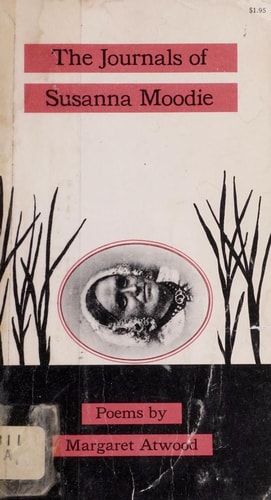
The Journals of Susanna Moodie: Poems
0
0
As an Amazon Associate and affiliate partner, Menrva Books earns from qualifying purchases. Learn more
Author Description
This cycle of poems is perhaps the most memorable evocation in modern Canadian literature of the myth of the wilderness, the immigrant experience, and the alienating and schizophrenic effects of the colonial mentality. Since it was first published in 1970 it has not only acquired the stature of a classic but, reprinted many times, become the best-known extended work in Canadian poetry.Susanna Moodie (1805-85) emigrated from England in 1832 to Upper Canada, where she settled on a farm with her husband. She wrote several books in Canada, notably Roughing It in the Bush, a famous account of pioneering that is still widely read. In poems about the arrival and the Moodies' seven years in the bush, which were followed by a more civilized ilfe in Belleville, and about Mrs Moodie in old age and then after death - in the present, when she observes the twentieth century destroying her past and its meaning - Margaret Atwood has created haunting meditations on an English gentlewoman's confrontation with the wilderness, and compelling variations on the themes of dislocation and alienation, nature and civilization.The poems are supplemented by Margaret Atwood's collages and an 'Afterword' in which the poet says: 'We are all imigrants to this place even if we were born here....'
Menrva's Summary
THE PULSE
The central conflict arises from the profound psychological and physical displacement of an English gentlewoman forced to reconcile her refined sensibilities with the harsh, indifferent reality of the Canadian wilderness. Margaret Atwood adopts the persona of Susanna Moodie to navigate the immigrant experience, tracing her transition from a structured life in England to the rugged demands of pioneer existence in Upper Canada. The narrative framework utilizes a series of poems to explore the internal schism between the settler's colonial identity and the untamed environment. Through this lens, the protagonist confronts the erosion of her past and the persistent alienation that defines her new reality.
INSIDE THE PAGES
- First-person persona poetry capturing the voice of a historical figure
- Exploration of the immigrant experience and cultural dislocation
- Juxtaposition of Victorian refinement against the Canadian wilderness
- Non-linear progression spanning from arrival to post-mortem observation
- Integration of visual art through original collages
- Thematic focus on the colonial mentality and its psychological effects
- Meditations on the passage of time and the destruction of historical meaning
- Use of nature as both a physical setting and a symbolic antagonist
THE COLLECTIVE ECHO
Readers and critics frequently highlight this work as a foundational text in Canadian literature that effectively bridges the gap between historical biography and lyrical introspection. Discussion often centers on Atwood's ability to inhabit the psyche of a nineteenth-century immigrant while simultaneously critiquing the broader implications of the colonial project. The pacing is deliberate, allowing the reader to experience the slow, often painful process of adaptation and the eventual fragmentation of the protagonist's identity. Many observers note that the inclusion of the author's own collages adds a distinct visual layer that reinforces the themes of displacement and memory. The work remains a subject of academic study due to its enduring relevance regarding the immigrant experience and the human relationship with the natural world.
Page Count:
64
Publication Date:
1970-08-15
Publisher:
Oxford University Press
ISBN-10:
0195401697
ISBN-13:
9780195401691
Poetry
Nature
Historical
Canadian
Colonialism
Community Tags
Similar Books