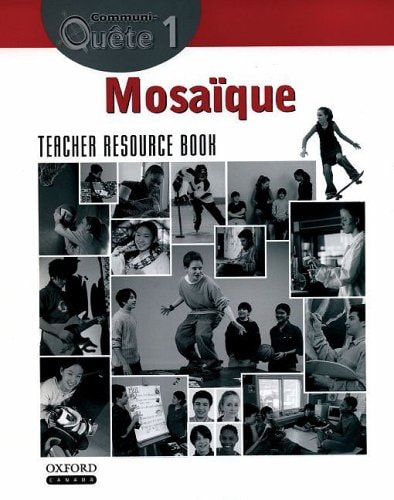
Communi-Quete: Mosaique - Teacher Resource Book
0
0
As an Amazon Associate and affiliate partner, Menrva Books earns from qualifying purchases. Learn more
Author Description
Students Are Given The Opportunity To Explore The Theory Of Multiple Intelligences, And To Determine Their Personal Learning Styles, As Well As Those Of Their Friends. The Goal Of The Theme Is To Encourage The Acceptance And Appreciation Of Differing Ways Of Thinking And Styles Of Learning. Final Task: Students Participate In A Talent Exhibition In Which They Demonstrate Their Personality Strengths, E.g. Presentation Of A Crossword Puzzle, Results Of An Interview, Or Rap Performance Etc. This Unit Includes The Principles Of Multiple Intelligences. The Trb Is Organized Into 8 To 10 Lessons. Each Lesson Is Broken Down Into Three Phrases: Pre-activity, Activity, Post-activity. The Trb Contains Methodology, Language, Content And Outcomes Summary Charts, And Comprehensive Lesson Plans Written By Practising Teachers. Also Includes Assessment And Evaluation With Reproducible Rubrics, Checklists And Worksheets, As Well As Additional Activities (in Reproducible Master Format). Inevery Thematic Unit, Teaching Notes Are Provided For Combined Grades, Differentiated Instruction For Varying Ability Levels And For Varying The Final Task.
Menrva's Summary
THE THESIS
This resource book investigates how the theory of multiple intelligences can be integrated into classroom curricula to foster student self-awareness and mutual appreciation. The authors, Beverley Biggar and Irene Bernard, provide a structured pedagogical framework designed for educators to help students identify their unique learning styles. By utilizing a thematic approach, the book argues that recognizing diverse cognitive strengths improves classroom inclusivity and student engagement.
THE SCOPE MAP
What You Will Find
- A structured curriculum organized into 8 to 10 distinct lessons.
- Methodological frameworks for implementing multiple intelligence theory in the classroom.
- Reproducible assessment tools including rubrics, checklists, and worksheets.
- Differentiated instruction strategies for combined grades and varying ability levels.
THE AUTHORITY PERSPECTIVE
Educators frequently utilize this text as a practical guide for implementing differentiated instruction in diverse classroom settings. Experts highlight the inclusion of reproducible masters and clear lesson structures as key features that assist teachers in managing complex thematic units.
Page Count:
96
Publication Date:
2003-02-26
Publisher:
Oxford University Press
ISBN-10:
0195418417
ISBN-13:
9780195418415
Education
Classroom Resources
Personality
French language
Teaching Methods
Community Tags
Similar Books