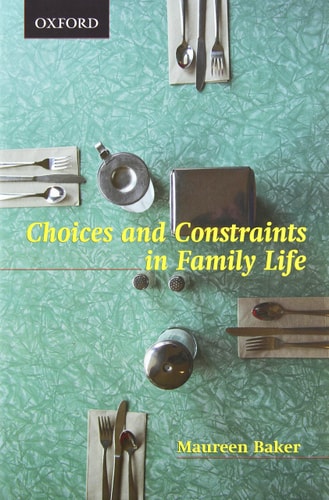
Choices and Constraints in Family Life
0
0
As an Amazon Associate and affiliate partner, Menrva Books earns from qualifying purchases. Learn more
Author Description
Compared to a few generations ago, our intimate relationships now involve more personal choices about our partners and sexual behavior. However, personal choices are also shaped by our family circumstances and events in the wider society, such as changes in educational opportunities, employment trends, social policies, technological innovations, media representations, and new ideas about human rights or personal entitlements. Patterns are noticeable in family life, including rising rates of cohabitation among both heterosexual and same-sex couples, fewer births but more outside marriage, and higher rates of separation, re-partnering and stepfamilies. In fact, similar trends are apparent in most western industrialized countries.New public expectations have heightened controversies about who is responsible for protecting and supporting vulnerable family members and those in need. Public debates have also questioned the validity of new forms of marriage, sought solutions to declining fertility and the enforcement of child support after separation, and examined new ways of interacting with immigrants whose family practices diverge from the majority.This book aims to understand how relationships and family practices have changed over the past decades in western industrialized countries, and to differentiate between actual changes and the misconceptions voiced in political speeches or perpetuated in the media. Discussions of social research will reveal that our personal choices about intimate partners, having children, dissolving relationships, and maintaining contact with parents and siblings are influenced by our family and cultural upbringing, our socioeconomic circumstances, the social policy environment, and political and economic events in the larger society. This means that the nature of family and personal life is always changing although some aspects remain remarkably stable.By examining relationships and families in Canada within a global context, we are better
Menrva's Summary
THE THESIS
This book investigates the complex interplay between individual agency and structural constraints in shaping contemporary family life within Western industrialized societies. Author Maureen Baker, a prominent sociologist, utilizes a wealth of demographic data and sociological research to challenge common misconceptions regarding the decline of the family. She argues that while personal choices regarding marriage, cohabitation, and child-rearing have expanded, they remain deeply embedded within socioeconomic frameworks, government policies, and shifting cultural norms.
THE SCOPE MAP
What You Will Find
- Comparative analysis of family trends across Western industrialized nations with a focus on Canada.
- Examination of the impact of social policies, employment trends, and educational opportunities on domestic life.
- Discussion of shifting demographics including cohabitation, divorce, re-partnering, and stepfamily dynamics.
- Critical evaluation of public debates surrounding fertility, child support, and the integration of diverse cultural family practices.
THE AUTHORITY PERSPECTIVE
Experts in the field of sociology recognize this text as a foundational resource for understanding the structural evolution of the modern family. Readers frequently note the clarity with which the author balances academic rigor with accessible analysis of complex social phenomena.
Page Count:
200
Publication Date:
2007-11-10
Publisher:
Oxford University Press
ISBN-10:
0195421051
ISBN-13:
9780195421057
Social Science
Mormons
Sociology
Family
Family Studies
Mormon Church
Social policy
Jesus Christ
Community Tags
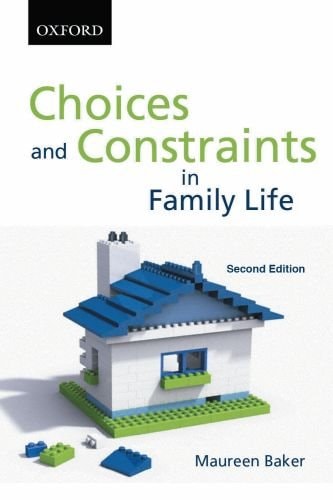
Other Editions(2)
Similar Books








Reader Comments
Share Your Thoughts
No comments yet. Be the first to share your thoughts!