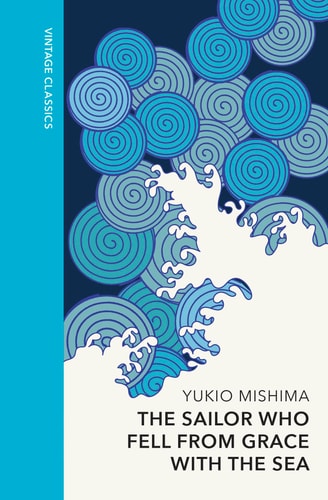
The Sailor Who Fell from Grace with the Sea
0
0
As an Amazon Associate and affiliate partner, Menrva Books earns from qualifying purchases. Learn more
Author Description
In this masterpiece of Japanese literature, a young boy, Noboru, and his group of friends, who are disillusioned by the adult world, idolize a sailor who they believe embodies the freedom of the sea. When the sailor begins a relationship with Noboru's widowed mother, the boys' admiration turns to resentment as they realize he intends to abandon his life at sea for a conventional existence, leading them to take drastic measures to preserve his integrity.
Menrva's Summary
THE PULSE
A young boy’s idolization of a sailor leads to a violent confrontation between romanticized ideals and the harsh reality of domestic life. Noboru, a thirteen-year-old boy, observes the world through a peephole in his bedroom, viewing his widowed mother’s life with detached scrutiny. When his mother begins an affair with Ryuji, a sailor who represents the masculine ideal of freedom and the sea, Noboru initially welcomes the intrusion. However, as Ryuji prepares to abandon his maritime life for a conventional domestic existence, the boy and his peer group perceive this transition as a betrayal of the sailor’s noble nature. The narrative follows the boys as they formulate a cold, calculated plan to preserve the sailor’s integrity through extreme measures.
INSIDE THE PAGES
- Third-person limited perspective focusing on the internal states of Noboru and Ryuji
- Juxtaposition of the vast, indifferent sea against the claustrophobic urban domestic setting
- Exploration of nihilistic philosophy and the rejection of bourgeois morality
- Use of voyeurism as a central motif for the protagonist’s detachment
- Precise, sensory-rich prose detailing both natural landscapes and industrial environments
- Examination of the conflict between individual destiny and societal expectations
- Development of a group dynamic characterized by intellectual cruelty and detachment
- Symbolic representation of the sea as a site of purity and absolute freedom
THE COLLECTIVE ECHO
Readers frequently highlight the stark contrast between the lyrical descriptions of the sea and the clinical, often disturbing, psychological development of the adolescent characters. Discussion often centers on the philosophical implications of the boys' actions and whether they represent a genuine pursuit of purity or a manifestation of sociopathic detachment. Critics often point to the author's ability to maintain a sense of impending dread throughout the narrative, even during moments of apparent domestic tranquility. The work is widely regarded as a significant examination of the tension between the desire for heroic transcendence and the mundane reality of adult life. Readers often note that the prose remains disciplined and sharp, avoiding sentimentality while addressing complex themes of betrayal and identity.
Page Count:
143
Publication Date:
1976-01-01
Publisher:
Penguin
ISBN-10:
0140028668
ISBN-13:
9780140028669
Literary Fiction
Asian
Coming of Age
Psychological
World Literature
Philosophical
Literary
Classics