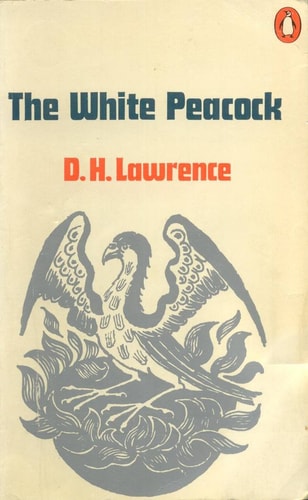
The White Peacock
0
0
As an Amazon Associate and affiliate partner, Menrva Books earns from qualifying purchases. Learn more
Author Description
Lawrence's first novel The White Peacock was begun in 1906, rewritten three times, and published in 1911. The Cambridge edition uses the final manuscript as base-text, and faithfully recovers Lawrence's words and punctuation from the layers of publishers' house-styling and their errors; original passages, changed for censorship reasons, are reinstated. Andrew Robertson's introduction sets out the history of Lawrence's writing and revision, and the generally favourable reception by friends and reviewers. Lawrence incorporated much of his own experience and reading on to the novel which is set just north-east of Eastwood, and modelled characters on his friends and family. The notes identify real-life places and people, explain dialect forms, literary allusions, and historical references, and include sensitive passages deleted before publication. The textual apparatus records all the variant readings and the appendix prints the two surviving fragments from the earliest manuscripts of the novel, then entitled 'Laetitia'.
Menrva's Summary
THE PULSE
The narrative follows the emotional maturation of Cyril Beardsall as he observes the complex, often destructive romantic entanglements of his sister Lettie and their childhood friend George Saxton. Cyril acts as both participant and witness to the shifting social dynamics within a rural English community, navigating the tension between traditional agrarian life and the encroaching industrialization of the early twentieth century. The story unfolds through a lyrical, first-person perspective that emphasizes the psychological interiority of the characters as they grapple with unfulfilled desires and the weight of societal expectations. The primary conflict arises from the characters' inability to reconcile their personal passions with the rigid moral and class structures of their environment.
INSIDE THE PAGES
- First-person retrospective narration
- Detailed descriptions of the English countryside
- Exploration of class dynamics in rural settings
- Focus on the psychological development of young adults
- Examination of the tension between nature and industrialization
- Intricate character studies based on the author's personal acquaintances
- Themes of unrequited love and social alienation
- Lyrical and descriptive prose style
THE COLLECTIVE ECHO
Readers and critics frequently highlight the novel as a significant early work that establishes the thematic preoccupations Lawrence would refine in his later career. Discussion often centers on the vivid, atmospheric quality of the prose, which captures the sensory details of the natural world with precision. While some readers find the pacing deliberate and introspective, others appreciate the depth of character development and the nuanced portrayal of human relationships. The work is often examined for its autobiographical elements and its candid reflection of the social anxieties prevalent in the Edwardian era. Scholars emphasize the importance of the text in understanding the evolution of Lawrence's literary voice and his critique of contemporary morality.
Page Count:
368
Publication Date:
1981-01-01
Publisher:
Penguin Putnam~mass
ISBN-10:
0140007601
ISBN-13:
9780140007602
Romance
Self-help
Literary Fiction
Literature & Fiction
Literary
Coming of Age
Classics
Womens Fiction
Family Saga
British literature
classic
Marriage
Relationships
Domestic Life
Genre Fiction
Community Tags
Other Editions(12)

Independently Published
2020
Default edition
Independently Published
2019

Independently Published
2018

CreateSpace Independent Publishing Platform
2018

CreateSpace Independent Publishing Platform
2018
CreateSpace Independent Publishing Platform
2017

Createspace Independent Publishing Platform
2014

Read Books Ltd.
2013

Fredonia Books (NL)
2003

Classic Books
2001

Cambridge University Press
1983
Penguin Putnam~mass
1981
Similar Books





Reader Comments
Share Your Thoughts
No comments yet. Be the first to share your thoughts!