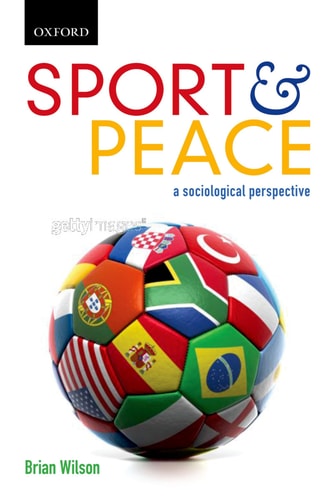
Sport and Peace: A Sociological Perspective
0
0
As an Amazon Associate and affiliate partner, Menrva Books earns from qualifying purchases. Learn more
Author Description
Over the past decade the social role of sport has received unprecedented attention, as global leaders ranging from politicians to high-profile celebrities have championed sport as a tool for promoting peace. In many areas, sport has successfully drawn attention to such worthy causes as conflict resolution, HIV prevention, environmental initiatives, and improved international relationships. Yet although sport can be a powerful tool for social good, it continues to reflect and reproduce social inequalities in ways commonly overlooked by those invested in the sport-for-peace movement. In this timely new analysis, Brian Wilson uses critical sociological theories to investigate the complex--and at times controversial--relationship between sport and peace.
Menrva's Summary
THE THESIS
This book investigates the sociological implications of using sport as a mechanism for international peace-building and social development. Brian G. Wilson, a scholar in the field of sociology, utilizes critical theoretical frameworks to examine the intersection of athletic competition and global conflict resolution. By analyzing both the potential benefits and the inherent contradictions of the sport-for-peace movement, the author challenges the assumption that sport is an inherently neutral or positive force in society.
THE SCOPE MAP
What You Will Find
- Critical sociological analysis of the sport-for-peace movement
- Examination of social inequalities reproduced within athletic structures
- Case studies on conflict resolution and international relations
- Theoretical evaluation of sport as a tool for social change
THE AUTHORITY PERSPECTIVE
Experts recognize this text as a significant contribution to the sociology of sport, particularly for its critical stance on institutionalized athletic programs. Readers frequently note the academic density of the prose, which makes it a suitable resource for students and researchers interested in the intersection of policy and physical culture.
Page Count:
256
Publication Date:
2012-05-04
Publisher:
Oxford University Press
ISBN-10:
0195432142
ISBN-13:
9780195432145
Sports
Social Science
Sociology
Sports
Peace studies
Community Tags
Similar Books