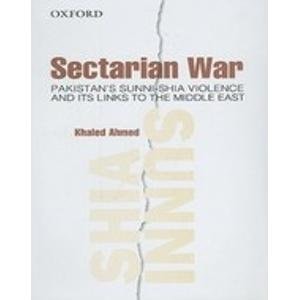
Sectarian War: Pakistan's Sunni-Shia Violence and its links to the Middle East
0
0
As an Amazon Associate and affiliate partner, Menrva Books earns from qualifying purchases. Learn more
Author Description
The book is an account of how the Shia-Sunni conflict was relocated from the Middle East to Pakistan after the rise of Revolutionary Iran in 1979, through the mediating agency of the rulers in Pakistan and the proliferation of the religious seminaries funded by Saudi Arabia. It examines the death of General Zia in the context of the sectarian conflict, goes into the process of production of apostatizing fatwas in Pakistan followed by violent action by organizations formed from the non-state actors used by the state for its covert wars. It also delves into the state of the Shia communities in the Middle East and their historical connections with South Asia. It examines the rise of Shia culture in Lucknow and its formative influence on the rise of the Shia in Iraq, with a parallel scrutiny of the rise of Wahhabism and its infiltration of India in the eighteenth century. It records the origins and history of organizations doing sectarian terrorism in Pakistan and their linkages to Al Qaeda whose trajectory into a sectarian identity is also traced to the rise of Al Zarqawi as a parallel leader in Iraq. The book facilitates an understanding of the phenomenon of terrorism in Pakistan today.
Menrva's Summary
THE THESIS
This book investigates the historical and geopolitical mechanisms that facilitated the migration of Sunni-Shia sectarian violence from the Middle East to Pakistan following the 1979 Iranian Revolution. Khaled Ahmed, a veteran journalist with extensive experience in South Asian political analysis, utilizes historical records, state policy documentation, and regional religious developments to construct his argument. He posits that the intersection of Pakistani state-sponsored covert operations, foreign funding of religious seminaries, and the proliferation of extremist ideologies created a unique environment for sectarian terrorism. The work serves as a critical examination of how state actors and non-state entities collaborated to reshape the religious landscape of the region.
THE SCOPE MAP
What You Will Find
- Analysis of the impact of the 1979 Iranian Revolution on South Asian sectarian dynamics.
- Examination of the role of religious seminaries and foreign funding in radicalization.
- Historical scrutiny of the rise of Wahhabism and its influence on the Indian subcontinent.
- Documentation of the origins and operational trajectories of sectarian terrorist organizations in Pakistan.
- Comparative study of Shia cultural influence in Lucknow and Iraq.
THE AUTHORITY PERSPECTIVE
Experts and regional analysts recognize this work as a significant contribution to the study of Pakistani political history and sectarian conflict. Readers frequently note the dense, research-heavy nature of the prose, which provides a comprehensive framework for understanding the complexities of modern terrorism in the region.
Page Count:
300
Publication Date:
2010-03-15
Publisher:
Oxford University Press
ISBN-10:
019547662X
ISBN-13:
9780195476620
Religion
History
Politics
Sunnites
Terrorism
Middle East
Pakistan
Islam
Religious Aspects
International relations
Community Tags
Similar Books