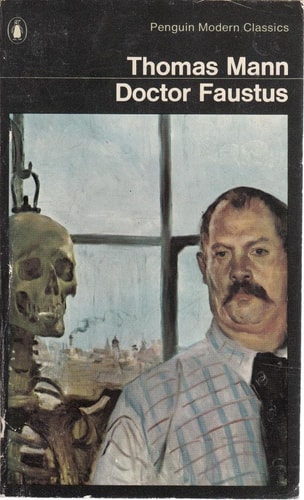
Doctor Faustus
0
0
As an Amazon Associate and affiliate partner, Menrva Books earns from qualifying purchases. Learn more
Author Description
Mann's rendering of the classic Faust legend explores the goals, values, and conflicts of modern man
Menrva's Summary
THE PULSE
The composer Adrian Leverkühn enters into a pact with the devil, trading his capacity for human affection for twenty-four years of unparalleled musical genius. Leverkühn seeks to transcend the limitations of traditional composition, pushing his creative boundaries until he reaches a state of profound isolation and spiritual decay. His descent is observed and documented by his lifelong friend, Serenus Zeitblom, who acts as the narrative anchor throughout the text. The story operates as a complex allegory for the cultural and political collapse of Germany during the early twentieth century, utilizing a non-linear, biographical framework to examine the intersection of art, morality, and national identity.
INSIDE THE PAGES
- Use of an unreliable or biased narrator in Serenus Zeitblom
- Integration of music theory and aesthetic philosophy
- Heavy reliance on German cultural and historical symbolism
- Exploration of the Faustian bargain archetype
- Dense, intellectual prose style characteristic of high modernism
- Examination of the relationship between genius and madness
- Detailed descriptions of fictional musical compositions
- Thematic focus on the corruption of the intellectual class
THE COLLECTIVE ECHO
Readers and critics frequently note the intellectual density of the prose, which demands significant patience and focus from the audience. Discussion often centers on the parallel between Leverkühn’s artistic decline and the broader socio-political trajectory of Germany during the era. Many highlight the effectiveness of the narrator’s perspective in grounding the more abstract philosophical arguments within a human context. The work is widely regarded as a significant examination of the cost of creative ambition and the moral responsibilities of the artist in a disintegrating society.
Page Count:
496
Publication Date:
1968-01-02
Publisher:
Penguin Classic
ISBN-10:
0140027238
ISBN-13:
9780140027235
Tragedy
Classics
German
Contemporary
Classic Literature
Modernism
Philosophical