
The Magic Mountain
0
0
As an Amazon Associate and affiliate partner, Menrva Books earns from qualifying purchases. Learn more
Author Description
Hans Castorp, a young German engineer, travels to the Swiss Alps to visit his cousin in a sanatorium. He expects to stay for three weeks, but he is soon diagnosed with tuberculosis and remains there for seven years. During this time, he is exposed to a variety of characters who represent different philosophical and political viewpoints, and he undergoes a profound intellectual and spiritual transformation.
Menrva's Summary
THE PULSE
A young man arrives at a Swiss sanatorium for a brief visit, only to find himself ensnared by the facility's stagnant atmosphere and philosophical debates for seven years. Hans Castorp, an aspiring engineer, intends to stay for three weeks to visit his cousin, but a diagnosis of tuberculosis forces him to remain in the rarefied air of the Berghof. He navigates a world defined by illness, time distortion, and the competing ideologies of his mentors, Settembrini and Naphta. The narrative framework employs a third-person omniscient perspective that meticulously tracks Castorp's intellectual and spiritual development against the backdrop of a pre-war Europe on the brink of collapse.
INSIDE THE PAGES
- Detailed exploration of the concept of time in a sequestered environment
- Extensive philosophical dialogues regarding humanism, politics, and religion
- Symbolism centered on illness as a metaphor for societal decay
- Meticulous depiction of the daily routines and social hierarchies of sanatorium life
- Examination of the tension between the active life and the contemplative life
- Use of recurring motifs to signify the protagonist's internal shifts
- Gradual transition from a realistic setting to a surreal, dreamlike atmosphere
- Integration of scientific and medical discourse of the early twentieth century
THE COLLECTIVE ECHO
Readers and critics frequently highlight the novel's dense, intellectual prose and its slow, deliberate pacing. Discussion often centers on the effectiveness of the sanatorium as a microcosm for European society before the First World War. Many observers note that the character development is secondary to the philosophical arguments presented through the various inhabitants of the Berghof. The work is widely recognized for its ability to sustain complex thematic threads over a significant length. Readers often find the shift from the protagonist's initial naivety to his eventual existential awareness to be the most compelling aspect of the narrative.
Page Count:
736
Publication Date:
1969-01-01
Publisher:
Vintage Books
ISBN-10:
0140014756
ISBN-13:
9780140014754
German
Contemporary
Philosophical
Modernism
classic
Bildungsroman
Community Tags
Other Editions(25)

Editorium, LLC
2025
Default edition
Seven Books
2025

Grapevine
2025

Cedro Classics
2024

Random House Digital Inc.
2023

Must Have Books
2023

Neeland Media
2023

General Press
2022

Actuel Editions
2020
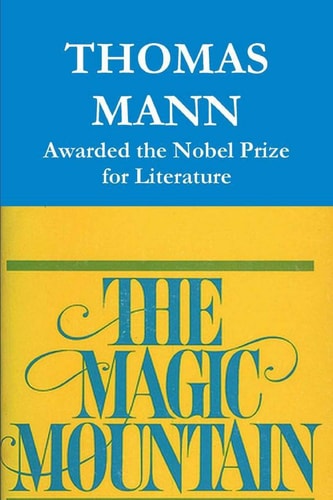
Blurb, Incorporated
2019

CreateSpace Independent Publishing Platform
2017

David Rehak
2016
McClelland & Stewart
2014

Tandem Library
1996

Vintage
1996

Knopf
1995

Vintage Books
1992

Penguin
1983

Franklin Library
1981

Penguin Books
1975
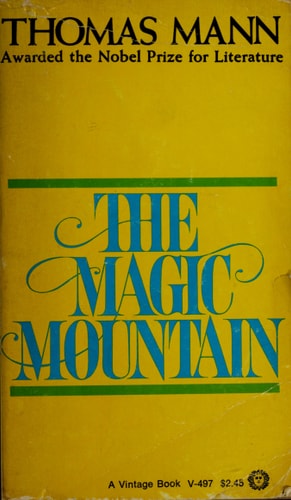
Vintage
1969
Vintage Books
1969

Modern Library
1967

Penguin
1960

1900
Similar Books





Reader Comments
Share Your Thoughts
No comments yet. Be the first to share your thoughts!