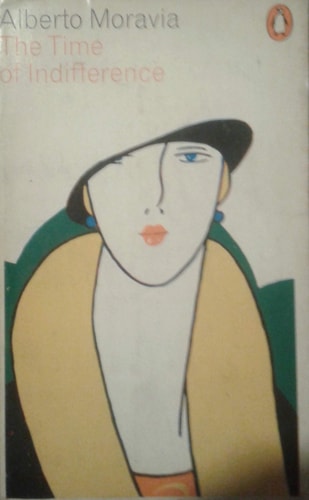
The Time of Indifference
0
0
As an Amazon Associate and affiliate partner, Menrva Books earns from qualifying purchases. Learn more
Author Description
The Time of Indifference is the story of a bourgeois Roman family—a widow and her two children—who are slowly losing their social standing and their money. As they struggle to maintain their lifestyle, they become increasingly entangled with Leo, a wealthy and manipulative man who is the mother's lover and is also trying to seduce the daughter. The novel is a powerful exploration of moral decay, existential boredom, and the hypocrisy of the middle class.
Menrva's Summary
THE PULSE
The narrative centers on the moral decay and existential paralysis of a bourgeois Roman family struggling to maintain their social standing amidst financial ruin. The protagonist, Michele, finds himself increasingly detached from the hypocritical machinations of his mother, Mariagrazia, and his sister, Carla, as they navigate a predatory relationship with a wealthy, manipulative suitor named Leo. The story operates through a third-person limited perspective that emphasizes the internal stagnation of the characters, highlighting their inability to act with genuine conviction or empathy. Set against the backdrop of a crumbling social order, the characters are constrained by their own inertia and the rigid expectations of their class.
INSIDE THE PAGES
- Exploration of moral apathy and existential boredom
- Critique of the Italian bourgeoisie during the interwar period
- Focus on the psychological disintegration of the family unit
- Use of irony to expose character hypocrisy
- Minimalist prose style emphasizing internal monologue
- Examination of the commodification of human relationships
- Setting as a reflection of social decay
- Non-heroic character arcs that prioritize observation over action
THE COLLECTIVE ECHO
Readers and critics frequently identify this work as a seminal examination of the existential void that characterized the early twentieth-century Italian middle class. Discussion often centers on the stark, unvarnished portrayal of the characters' inability to connect with one another or their own moral compasses. Many observers highlight the effectiveness of Moravia's clinical prose in stripping away the veneer of respectability from his subjects. The novel is widely regarded as a significant contribution to modernist literature, specifically for its focus on the psychological consequences of social and economic instability. Readers often note that the pacing is deliberate and reflective, favoring character study over traditional plot progression.
Page Count:
302
Publication Date:
1970-01-01
Publisher:
Penguin
ISBN-10:
0140031235
ISBN-13:
9780140031232
Psychological
Classic Literature
Italian
Modernist
Existential Fiction