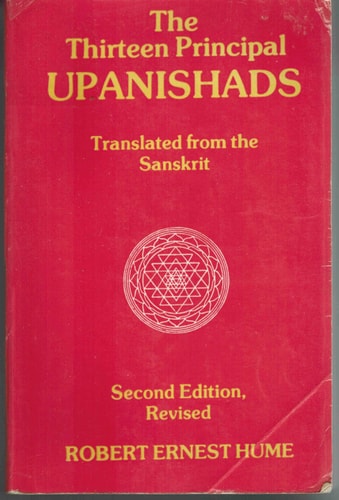
The Thirteen Principal Upanishads
0
0
As an Amazon Associate and affiliate partner, Menrva Books earns from qualifying purchases. Learn more
Author Description
The metaphysical treatises known as the Upanishads represent the efforts of the major thinkers of early India, from around the sixth century B.C., to solve the problems of the origin, the nature, and the destiny of man and the universe. These texts, translated by Hume who faithfully rendered the original Sanskrit, include an appendix of recurrent and parallel passages in the principal Upanishads and the Bhagavad-Gita, full annotations, a bibliography, and a helpful exposition of the methods of translation.
Menrva's Summary
THE THESIS
This work investigates the foundational metaphysical inquiries of early Indian thinkers regarding the nature of existence, the origin of the universe, and the ultimate destiny of the human soul. Robert Ernest Hume, a scholar of Sanskrit and comparative religion, provides a rigorous translation of the thirteen principal Upanishads. His approach emphasizes linguistic fidelity and historical context, supported by extensive annotations and a comparative index of parallel passages to assist readers in navigating these complex ancient texts.
THE SCOPE MAP
What You Will Find
- Translations of the thirteen principal Upanishads from the original Sanskrit.
- A comprehensive appendix detailing recurrent and parallel passages across the Upanishads and the Bhagavad-Gita.
- Scholarly annotations and a bibliography for further research into early Indian philosophy.
- An exposition on the methodology employed for translating archaic philosophical terminology.
THE AUTHORITY PERSPECTIVE
Scholars and students of Eastern philosophy frequently cite this volume as a foundational academic resource due to its meticulous translation and scholarly apparatus. Readers often note the density of the prose, which reflects the profound and abstract nature of the original Vedic treatises.
Page Count:
604
Publication Date:
1984-08-02
Publisher:
Oxford University Press
ISBN-10:
0195616413
ISBN-13:
9780195616415
Non-Fiction
Philosophy
Religion
Spirituality
Upanishads
Hinduism
Community Tags
Similar Books