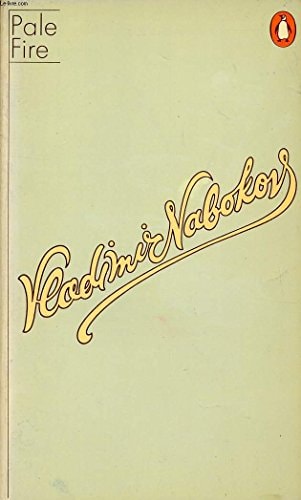
Pale Fire
0
0
As an Amazon Associate and affiliate partner, Menrva Books earns from qualifying purchases. Learn more
Author Description
The American poet John Shade is dead. His last poem, 'Pale Fire', is put into a book, together with a preface, a lengthy commentary and notes by Shade's editor, Charles Kinbote. Known on campus as the 'Great Beaver', Kinbote is haughty, inquisitive, intolerant, but is he also mad, bad - and even dangerous? As his wildly eccentric annotations slide into the personal and the fantastical, Kinbote reveals perhaps more than he should.Nabokov's darkly witty, richly inventive masterwork is a suspenseful whodunit, a story of one-upmanship and dubious penmanship, and a glorious literary conundrum.Part of a major new series of the works of Vladimir Nabokov, author of Lolita and Pale Fire, in Penguin Classics.
Menrva's Summary
THE PULSE
Following the death of the esteemed poet John Shade, his editor Charles Kinbote attempts to curate and annotate Shade's final 999-line poem, 'Pale Fire'. Kinbote, an eccentric and intrusive academic, uses the commentary section of the book to project his own elaborate, potentially delusional narrative onto the poem's verses. The story unfolds through this unconventional structure, pitting the objective reality of the poem against the subjective, increasingly erratic interpretations of the editor. As Kinbote’s notes spiral into personal obsession and political fantasy, the reader must navigate the tension between the poet's original intent and the editor's manipulative framing.
INSIDE THE PAGES
- Epistolary-adjacent structure consisting of a foreword, poem, commentary, and index
- Unreliable narrator who actively subverts the text he is editing
- Complex interplay between poetry and prose commentary
- Satirical depiction of academic life and literary criticism
- Non-linear revelation of the editor's backstory
- Intricate wordplay and linguistic puzzles
- Themes of exile, identity, and the nature of authorship
- Ambiguous resolution regarding the true events surrounding the poet's death
THE COLLECTIVE ECHO
Readers and critics frequently analyze this work as a definitive example of metafiction, noting how the structure forces the reader to become an active participant in deciphering the narrative. Discussion often centers on the reliability of Charles Kinbote, with many debating whether his annotations are a genuine attempt at scholarship or a calculated effort to hijack the poet's legacy. The balance between the lyrical quality of the central poem and the biting, often absurd wit of the commentary is consistently highlighted as a primary stylistic achievement. Many observers emphasize that the book functions as a complex puzzle, requiring multiple readings to fully grasp the layers of irony and hidden connections embedded within the text.
Page Count:
256
Publication Date:
1973-01-01
Publisher:
Penguin Books Ltd
ISBN-10:
014003692X
ISBN-13:
9780140036923
Mystery
Literary Fiction
Satire
Metafiction
Classics
Literary
Academic