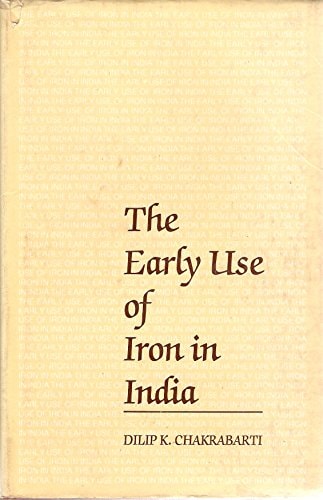
The Early Use of Iron in India
0
0
As an Amazon Associate and affiliate partner, Menrva Books earns from qualifying purchases. Learn more
Author Description
This volume highlights the extraordinary richness, diversity, and extensive distribution of iron ores in India, along with the equally rich, diverse, and widely scattered preindustrial tradition of iron and steel manufacture. Archaeologically, Chakrabarti demonstrates how by c. 1000 B.C. the major areas of the subcontinent passed into a full-fledged Iron Age, and how the process must be considered to have begun around the middle of the second millenium B.C. This book shows how the antiquity of Indian steel-making and examines literary sources which throw light on the use of iron in Indian agriculture.
Menrva's Summary
THE THESIS
This volume investigates the chronological origins and technological development of iron and steel production within the Indian subcontinent. Dilip K. Chakrabarti, a noted scholar in Indian archaeology, utilizes a synthesis of archaeological evidence and historical literary sources to challenge previous timelines. He argues that the transition to a full-fledged Iron Age in India was well-established by 1000 B.C., with the foundational processes likely originating in the mid-second millennium B.C.
THE SCOPE MAP
What You Will Find
- Analysis of the geological distribution and diversity of iron ore deposits across India.
- Examination of preindustrial iron and steel manufacturing traditions.
- Archaeological evidence documenting the transition to the Iron Age in the Indian subcontinent.
- Review of ancient literary sources regarding the application of iron in agricultural practices.
THE AUTHORITY PERSPECTIVE
Experts recognize this work as a foundational text for understanding the early history of metallurgy in South Asia. Scholars frequently cite Chakrabarti's research for its rigorous integration of archaeological data and textual analysis.
Page Count:
200
Publication Date:
1992-01-01
Publisher:
Oxford University Press
ISBN-10:
0195629922
ISBN-13:
9780195629927
History
Iron
Technology
Archaeology
Metallurgy
India
Community Tags
Similar Books