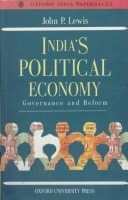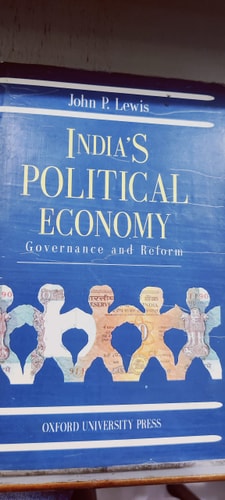
India's Political Economy: Governance and Reform
0
0
As an Amazon Associate and affiliate partner, Menrva Books earns from qualifying purchases. Learn more
Author Description
In this work, an American analyst of Indian economic development looks at the way the interplay between markets and governments has evolved over the past thirty-five years. Starting with a statement of the issue, Professor Lewis explores the history of what transpired between the government and its principal aid donors during its first experience with reform in the late 1960s. Thereafter, he discusses rural matters from the 1970s, current policy issues, and the possibilities of movement toward a more "spread out, lightly centered system of distant, differentiated states." Scholars of India's development, as well as economists, will find this book informative and enlightening.
Menrva's Summary
THE THESIS
This work investigates how the complex interplay between market forces and government intervention has shaped India's economic development over a thirty-five-year period. Professor John P. Lewis, an experienced analyst of Indian economic affairs, utilizes historical data and policy analysis to evaluate the nation's reform efforts. He examines the relationship between the Indian government and international aid donors, providing a framework for understanding the evolution of the country's economic governance and the potential for future decentralized state systems.
THE SCOPE MAP
What You Will Find
- Historical analysis of Indian economic reform starting from the late 1960s.
- Examination of the evolving relationship between the Indian government and international aid donors.
- Detailed discussion of rural economic policy shifts throughout the 1970s.
- Theoretical exploration of a more decentralized, differentiated state governance model.
THE AUTHORITY PERSPECTIVE
Experts and scholars of Indian development recognize this text as a significant historical account of the country's mid-twentieth-century economic trajectory. Readers frequently note the academic density of the prose, which provides a specialized look at the intersection of political governance and economic reform.
Page Count:
414
Publication Date:
1995-06-15
Publisher:
Oxford University Press
ISBN-10:
0195635159
ISBN-13:
9780195635157
Economics
Public Policy
India