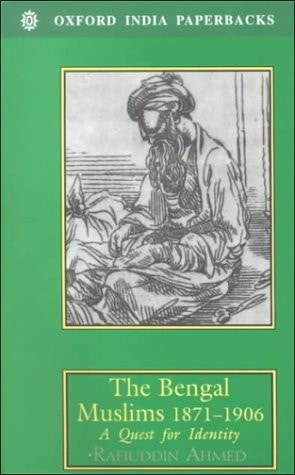
The Bengal Muslims 1871-1906: A Quest for Identity
0
0
As an Amazon Associate and affiliate partner, Menrva Books earns from qualifying purchases. Learn more
Author Description
Contrary to most works on the subject which treat the rural poor as an appendage of their urban co-religionists, this study concentrates on the evolution of mass awareness among the Muslims of Bengal, basing itself on an examination of the Bengali Muslim religious literature known as puthis. This work asks specific questions and develops the central thesis that for the Muslim masses, the reformist appeal of the Islamic revivalists proved a source of strength as well as of weakness: it roused them to action but made them susceptible to communal propaganda.
Menrva's Summary
THE THESIS
This study investigates the evolution of mass awareness among the Muslims of Bengal between 1871 and 1906, specifically examining how religious identity was constructed and transformed. Rafiuddin Ahmed, a scholar of South Asian history, utilizes a unique corpus of Bengali Muslim religious literature known as puthis to challenge traditional historiography. He argues that the reformist appeals of Islamic revivalists provided the rural Muslim masses with a sense of identity that simultaneously empowered them and rendered them vulnerable to communal political mobilization.
THE SCOPE MAP
What You Will Find
- Analysis of the socio-political climate in Bengal during the late 19th and early 20th centuries.
- Examination of puthi literature as a primary source for understanding rural consciousness.
- Investigation into the intersection of religious reform movements and communal identity formation.
- Evaluation of the distinction between urban elite perspectives and rural mass experiences.
THE AUTHORITY PERSPECTIVE
Historians and scholars of South Asian studies recognize this work as a foundational text for understanding the grassroots development of Muslim identity in Bengal. Readers frequently note the academic density of the prose and the author's meticulous use of vernacular religious texts to reconstruct the social history of the period.
Page Count:
304
Publication Date:
1996-10-10
Publisher:
Oxford University Press
ISBN-10:
0195639197
ISBN-13:
9780195639193
History
Religion
Sociology
Muslims india
Islamic Studies
Community Tags
Similar Books