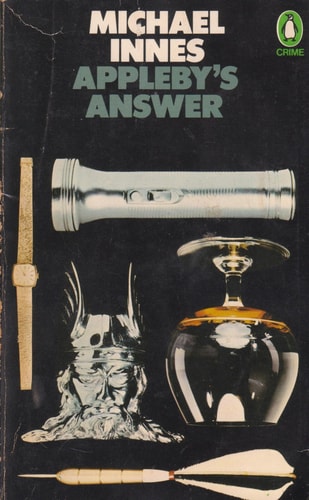
Appleby's Answer
0
0
As an Amazon Associate and affiliate partner, Menrva Books earns from qualifying purchases. Learn more
Author Description
A request for an imaginative murder plot and the mysterious death of a country rector send Priscilla Pringle, a mystery writer, to the English village of Long Canings.
Menrva's Summary
THE PULSE
A request for an imaginative murder plot and the mysterious death of a country rector send Priscilla Pringle, a mystery writer, to the English village of Long Canings. Priscilla Pringle finds herself thrust into a real-life investigation when the boundaries between her fictional craft and the reality of a local homicide begin to blur. She must navigate the social intricacies of the village while contending with suspects who seem to be acting out roles from a script. The narrative utilizes a third-person perspective to observe the interplay between the eccentric inhabitants and the analytical mind of the protagonist. Logical deduction serves as the primary tool for unraveling the deception hidden beneath the quiet facade of the countryside.
INSIDE THE PAGES
- Traditional English village setting
- Focus on literary tropes and meta-fictional elements
- Intellectual puzzle-solving approach
- Eccentric cast of supporting characters
- Emphasis on dialogue and social observation
- Slow-burn investigative pacing
- Subtle humor and irony
- Complex, multi-layered plot construction
THE COLLECTIVE ECHO
Readers frequently highlight the author's penchant for witty prose and intricate, puzzle-like plotting that defines the Golden Age style. Discussion often centers on the clever meta-fictional premise, which allows the narrative to comment on the conventions of the mystery genre itself. Critics often note the atmospheric depiction of the English countryside, which provides a stark contrast to the calculated nature of the crimes committed. Many enthusiasts appreciate the intellectual challenge presented by the text, noting that the pacing favors cerebral engagement over high-octane action sequences. The work is widely regarded as a sophisticated example of the classic whodunit format.
Page Count:
160
Publication Date:
1985-10-01
Publisher:
Penguin Books
ISBN-10:
0140039813
ISBN-13:
9780140039818
Mystery
Classic Crime
Detective
High Fantasy
British Mystery
Community Tags
Similar Books