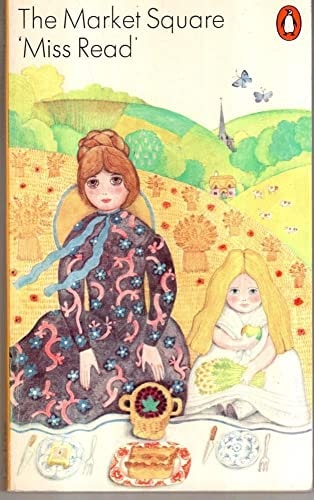
The Market Square
0
0
As an Amazon Associate and affiliate partner, Menrva Books earns from qualifying purchases. Learn more
Author Description
Round the market square the life of Caxley revolved, from horse-drawn drays to the noisy new motors and the aeroplanes which the young men of Caxley longed to fly, from the coronation of King Edward VII to the last flowering of the Empire, ending on the muddly battlefields of the Somme..For Sep it was the end of an era; for Bertie and Kathy, the beginning of happiness; and for young Edward, tasting his first glass of wine, there was a world of tomorrows.
Menrva's Summary
THE PULSE
The arrival of the twentieth century forces the residents of Caxley to navigate the rapid transition from traditional rural life to the industrial and military upheavals of the Great War. As the town of Caxley evolves from the Victorian era into the early 1900s, the narrative tracks the shifting fortunes of its inhabitants against the backdrop of a changing England. The story follows several interconnected families as they face the encroachment of modern technology, the decline of imperial certainty, and the eventual devastation of the Somme. The prose maintains a measured, observational tone, documenting the daily rhythms of the market square while highlighting the personal stakes for characters like Sep, Bertie, and Kathy. The narrative framework functions as a social chronicle, capturing the transition of a community through the eyes of those experiencing the loss of an era.
INSIDE THE PAGES
- Detailed depiction of early 20th-century English provincial life
- Focus on the impact of technological advancement on rural communities
- Exploration of class dynamics within a small market town
- Chronological progression from the Edwardian era to the First World War
- Emphasis on the domestic sphere and local commerce
- Character-driven vignettes illustrating generational shifts
- Atmospheric rendering of the Caxley market square as a central hub
- Examination of the psychological toll of global conflict on a local population
THE COLLECTIVE ECHO
Readers frequently highlight the author's ability to capture the quiet, steady rhythm of English village life before it is irrevocably altered by historical events. Discussion often centers on the nostalgic yet realistic portrayal of the Edwardian period and the subsequent loss of innocence during the war years. Critics note that the pacing is deliberate and reflective, favoring character development and social observation over high-octane plot progression. The book is often praised for its authentic dialogue and the subtle way it weaves personal milestones into the broader fabric of national history. Readers who appreciate character-focused narratives that prioritize atmosphere and historical detail will find the work particularly engaging.
Page Count:
1
Publication Date:
1969-01-01
Publisher:
Penguin Books
ISBN-10:
0140030077
ISBN-13:
9780140030075
Historical Fiction
20th Century
British literature
Contemporary
Small Town
Family Saga
Community Tags
Similar Books
![Ring In The New [Paperback] [Jan 01, 1971] Bentley, Phyllis](https://storage.googleapis.com/menrva_img_storage/covers/generated/9780090045303.jpg)