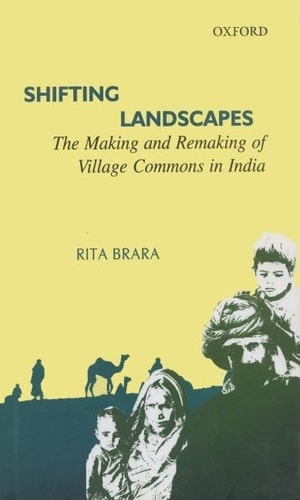
Shifting Landscapes: The Making and Remaking of Village Commons in India
0
0
As an Amazon Associate and affiliate partner, Menrva Books earns from qualifying purchases. Learn more
Author Description
This book is a high quality ethnographic study in the classical sense. The fundamental question that Brara asks in her book is whether there are other ways of thinking about the village than in terms of its distinctions of caste, vertical ties created by patron-client relations of congregation of private propertied peasantry. She offers the idea that villagers can and do represent and act on matters of common concern but that this does not commit us to thinking of village communities as harmonious wholes. Brara explores the institutional arrangements (commons) as a concept to analyze ideas of common good, the emergence of public action and property rights in Indian villages. She breaks from existing paradigms of agency as located in peasant movements and subaltern history. She contends that these are imagined always in relation to an elite and instead offers the idea of the shifting frames within which sociality operates at the village level.
Menrva's Summary
THE THESIS
This book investigates whether the Indian village can be conceptualized through institutional arrangements of common concern rather than solely through the traditional lenses of caste, patron-client relations, or private property ownership. Rita Brara, an established scholar in sociology and anthropology, utilizes rigorous ethnographic fieldwork to challenge existing paradigms of peasant agency. She argues that sociality at the village level operates within shifting frames that do not necessitate viewing the community as a harmonious whole. By focusing on the concept of the commons, she provides a framework for understanding how public action and property rights emerge in rural Indian contexts.
THE SCOPE MAP
What You Will Find
- Ethnographic analysis of village institutional arrangements and common property resources.
- A critical evaluation of traditional sociological paradigms regarding caste and peasant movements.
- Primary source observations of social interactions and collective action in Indian villages.
- A theoretical framework for analyzing the intersection of property rights and the common good.
THE AUTHORITY PERSPECTIVE
Experts recognize this work as a significant contribution to rural sociology, noting its departure from subaltern history models. Readers frequently highlight the academic density of the prose and its utility as a foundational text for understanding the complexities of Indian village social structures.
Page Count:
332
Publication Date:
2006-01-06
Publisher:
Oxford University Press
ISBN-10:
0195673018
ISBN-13:
9780195673012
property rights
Rural Studies
India
Sociology
Social History
Anthropology
Villages india
Community Tags
Similar Books