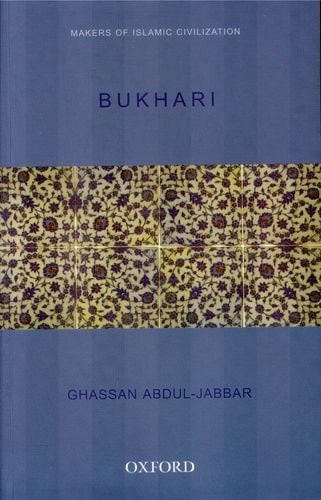
Bukhari
0
0
As an Amazon Associate and affiliate partner, Menrva Books earns from qualifying purchases. Learn more
Author Description
Bukhari (d.256/870) is famed throughout the Islamic world as the greatest practitioner in the field of hadith textual reports of what the Prophet said, did or approved. Bukhari s magnum opus, the Sahib, is, after the Qur an, the most widely revered book in Islam. It is a compilation of the soundest of sound hadiths. The Prophet s way (Sunna) is understood by Muslims as embodying both the ideal and practical reality of what the Qur an enjoins. Accordingly, much of the edifice of rules and norms of the Islamic way of life is constructed around the hadith.Most people read the Sahib as a transparent medium through which they can hear the Prophet speak. In reality, Bukhari s work is a highly sophisticated argument about how hadiths are verified, what meaning and authority they carry, and how far the practice of the Prophet can be securely derived from them. When Bukhari wrote the Sahih, these were not settled questions. The book appeared at a turning-point in the history of Islamic scholarship, and helped determine its future direction.In this remarkably lucid essay, addressed to the non-specialist, the author disentangles Bukhari s subtle handling and arrangement of his material, explaining how far his approach to questions about textual authenticity and authority differed from his predecessors and contemporaries. These questions, of abiding concern in all societies, have a particular relevance and urgency for modern Islamic scholarship.
Menrva's Summary
THE THESIS
This book investigates the historical significance and methodological sophistication of Muhammad al-Bukhari, the compiler of the most revered collection of hadith in Islamic tradition. Abdul-Jabbar Ghassan provides a scholarly examination of Bukhari's life and his magnum opus, the Sahih, situating the work within the intellectual climate of the 9th century. The author argues that the Sahih is not merely a transparent record of the Prophet's words, but a complex, deliberate argument regarding textual verification and religious authority. By analyzing the structural arrangement of the text, Ghassan demonstrates how Bukhari's specific approach helped define the future trajectory of Islamic jurisprudence and scholarship.
THE SCOPE MAP
What You Will Find
- Historical context of 9th-century Islamic scholarship and the evolution of hadith verification.
- Analysis of the structural and thematic arrangement of the Sahih.
- Comparative study of Bukhari's methodology versus his contemporaries and predecessors.
- Examination of the role of Sunna in establishing the norms and rules of Islamic life.
THE AUTHORITY PERSPECTIVE
Experts and readers alike praise this work for its ability to distill complex theological and historical arguments into a format accessible to non-specialists. The text is frequently cited as a clear, foundational introduction for those seeking to understand the mechanics of hadith scholarship and the historical weight of Bukhari's contributions.
Page Count:
145
Publication Date:
2011-01-01
Publisher:
Oxford University Press
ISBN-10:
0195676564
ISBN-13:
9780195676563
Biography
History
Religion
Islam
Theology
Hadith
Community Tags
Similar Books