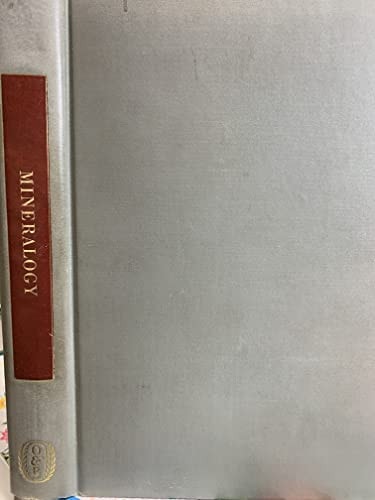
Introduction to Mineralogy
0
0
As an Amazon Associate and affiliate partner, Menrva Books earns from qualifying purchases. Learn more
Author Description
Introduction to Mineralogy consolidates much of the material now covered in traditional mineralogy and optical mineralogy courses and focuses on describing minerals within their geologic context. It presents the important traditional content of mineralogy including crystallography, chemical bonding, controls on mineral structure, mineral stability, and crystal growth to provide a foundation that enables students to understand the nature and occurrence of minerals. Physical, optical, and X-ray powder diffraction techniques of mineral study are described in detail, and common chemical analytical methods are outlined as well. Detailed descriptions of over 100 common minerals are provided, and the geologic context within which these minerals occur is emphasized. Appendices provide tables and diagrams to help students with mineral identification, using both physical and optical properties. Numerous line drawings, photographs, and photomicrographs help make complex concepts understandable. Introduction to Mineralogy not only provides specific knowledge about minerals but also helps students develop the intellectual tools essential for a solid, scientific education. This comprehensive text is useful for undergraduate students in a wide range of mineralogy courses.
Menrva's Summary
THE THESIS
This text investigates the fundamental principles of mineralogy by integrating traditional crystallography with modern optical and analytical techniques within a geologic framework. William D. Ness provides a structured academic approach to the study of minerals, drawing upon established geological science to explain chemical bonding, structural stability, and crystal growth. The book serves as a comprehensive pedagogical tool designed to bridge the gap between theoretical mineralogy and practical laboratory application for undergraduate students.
THE SCOPE MAP
What You Will Find
- Comprehensive coverage of crystallography, chemical bonding, and mineral stability principles.
- Detailed methodologies for physical, optical, and X-ray powder diffraction analysis.
- Systematic descriptions of over 100 common minerals categorized by their geologic occurrence.
- Practical appendices featuring identification tables and diagnostic diagrams for laboratory use.
THE AUTHORITY PERSPECTIVE
Experts and educators identify this work as a foundational text that effectively consolidates material typically split between separate mineralogy and optical mineralogy courses. Students and instructors frequently note the clarity of the technical illustrations and the logical progression of the analytical methods presented.
Page Count:
0
Publication Date:
2008-01-01
Publisher:
Oxford University Press
ISBN-10:
019569578X
ISBN-13:
9780195695786
Science
Geology
textbook
Optics
Reference
Mineralogy
Community Tags
Similar Books