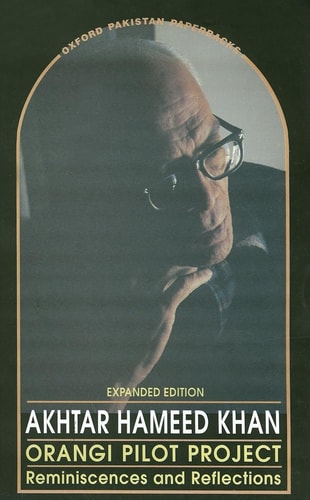
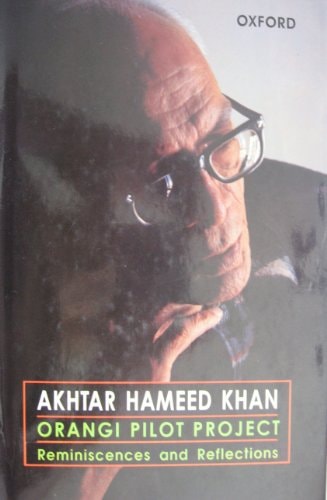
Orangi Pilot Project: Reminiscences and Reflections
0
0
As an Amazon Associate and affiliate partner, Menrva Books earns from qualifying purchases. Learn more
Author Description
This book is a collection of articles and papers that first appeared in 1996 in hardback. It describes the physical and socio-economic conditions in the informal settlements of Orangi, and the actors and processes involved in the development of these squatter townships. This paperback EDITION contains three new chapters that study the phenomenon of replication of the Orangi experiment-the manner in which it is helping whole communities overcome problems relating to sanitation, housing, health, education, and employment.
Menrva's Summary
THE THESIS
This collection investigates the efficacy of community-led development models in addressing the systemic socio-economic challenges faced by informal urban settlements. Akhtar Hameed Khan, a pioneer in participatory development, draws upon his extensive experience managing the Orangi Pilot Project to argue that local communities possess the inherent capacity to solve their own infrastructure and social problems. The text provides a detailed framework for how grassroots initiatives can effectively manage sanitation, housing, and health services without relying solely on top-down government intervention.
THE SCOPE MAP
What You Will Find
- Analysis of socio-economic conditions within the Orangi informal settlements.
- Documentation of the processes involved in community-led sanitation and housing development.
- Case studies detailing the replication of the Orangi model in other townships.
- Evaluation of community-based strategies for improving health, education, and employment outcomes.
THE AUTHORITY PERSPECTIVE
Experts and development practitioners frequently cite this work as a foundational text for understanding participatory urban planning in the Global South. Readers often note the practical, grounded nature of the prose, which prioritizes actionable community-based methodology over abstract theoretical discourse.
Page Count:
0
Publication Date:
1998-01-01
Publisher:
OUP Pakistan
ISBN-10:
0195777409
ISBN-13:
9780195777406
Public Health
Sociology
Nonfiction
urban planning
Community Development
Community Tags
Other Editions(3)
Similar Books