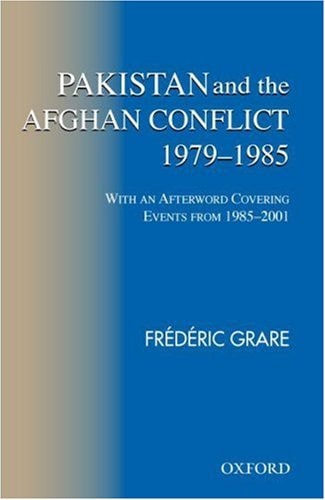
Pakistan and the Afghan Conflict: 1979-1985
0
0
As an Amazon Associate and affiliate partner, Menrva Books earns from qualifying purchases. Learn more
Author Description
To the superficial observer, Pakistan's involvement in the Afghan conflict with the USSR was the outcome of an ideological alliance. This study seeks to establish that the roots of this involvement led away from both Afghanistan and ideology to Pakistan's neighbor to the east. The question that is central to this study: did Pakistan have the option of signing an agreement with the USSR between 1983 and 1985 that would end the hostilities?
Menrva's Summary
THE THESIS
This study investigates whether Pakistan possessed a viable diplomatic alternative to continue its involvement in the Afghan-Soviet conflict between 1983 and 1985. Frédéric Grare, a scholar specializing in South Asian security, utilizes historical analysis to challenge the conventional narrative that Pakistan's participation was driven primarily by ideological alignment with the anti-Soviet resistance. Instead, the author argues that Pakistan's strategic decisions were dictated by regional security concerns regarding India, suggesting that the conflict served as a proxy for broader geopolitical maneuvering rather than a simple ideological crusade.
THE SCOPE MAP
What You Will Find
- Analysis of the 1979-1985 period of the Soviet-Afghan War
- Examination of diplomatic negotiations between Pakistan and the USSR
- Evaluation of the influence of Indo-Pakistani relations on foreign policy
- Assessment of the strategic motivations behind Pakistan's military and political alliances
THE AUTHORITY PERSPECTIVE
Experts recognize this work as a critical contribution to understanding the geopolitical complexities of the Cold War in South Asia. Readers frequently note the academic density of the prose and the author's rigorous reliance on regional security frameworks to explain state behavior.
Page Count:
250
Publication Date:
2003-05-29
Publisher:
Oxford University Press
ISBN-10:
0195797930
ISBN-13:
9780195797930
History
Pakistan
International relations
Military History
Community Tags
Similar Books