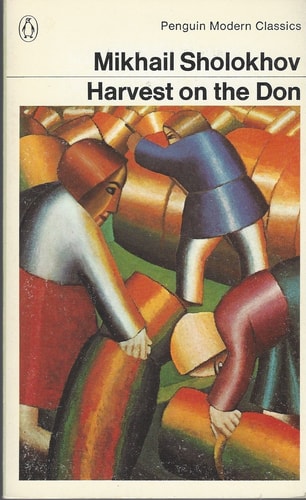
Harvest on the Don
0
0
As an Amazon Associate and affiliate partner, Menrva Books earns from qualifying purchases. Learn more
Author Description
In HARVEST ON THE DON, Mikhail Sholokhov continues the dramatic story of the impact of revolution on the people of his native Russia. IN AND QUIET FLOWS THE DON and THE DON FLOWS HOME TO THE SEA, Sholokhov tells of the violent and tumultuous days of the revolution and the civil war. In this novel we see the same Don village, Gremyachy Log, whose people have lived for generations according to medieval ritual, torn from the ancient ways. To Gremyachy Log has come Davidov, representative of the Party's drive to revolutionize village agriculture. The peasants see a vision of a better life in the plans of this man. Yet to-the-death opposition lurks just beneath the surface.
Menrva's Summary
THE PULSE
The forced collectivization of a traditional Cossack village triggers a violent confrontation between ancient agrarian customs and the rigid mandates of the Soviet state. Davidov, a dedicated Party representative, arrives in Gremyachy Log to implement agricultural reform, aiming to dismantle centuries-old social structures. He faces deep-seated resistance from villagers who view these changes as an existential threat to their way of life. The narrative follows the friction between ideological progress and entrenched tradition, highlighting the human cost of political upheaval in a rural setting. The story is presented through a third-person perspective that captures the shifting loyalties and internal conflicts of the village inhabitants.
INSIDE THE PAGES
- Detailed depiction of Cossack village life and traditions
- Exploration of the ideological conflict between Party officials and rural peasants
- Examination of the psychological impact of rapid social change
- Realistic portrayal of agricultural labor and rural hardship
- Focus on the tension between individual autonomy and collective mandates
- Character-driven narrative highlighting diverse reactions to revolution
- Atmospheric setting reflecting the harsh landscape of the Don region
- Examination of the moral complexities inherent in political transformation
THE COLLECTIVE ECHO
Readers and critics frequently observe that this work serves as a vital conclusion to the broader Don saga, providing a granular look at the consequences of Soviet policy. Discussion often centers on the nuanced portrayal of Davidov, whose idealism is tested by the harsh realities of the village environment. Many highlight the author's ability to balance political commentary with the intimate struggles of individual characters caught in the gears of history. The pacing is noted for its deliberate, methodical approach to building tension, which mirrors the slow but inevitable erosion of traditional village life. Scholars often emphasize the text's value as a primary source for understanding the social friction caused by the collectivization era.
Page Count:
400
Publication Date:
1978-01-01
Publisher:
PENGUIN BOOKS LTD
ISBN-10:
0140044744
ISBN-13:
9780140044744
Classics
Historical Fiction
Social Realism
Russian
Political fiction
Contemporary