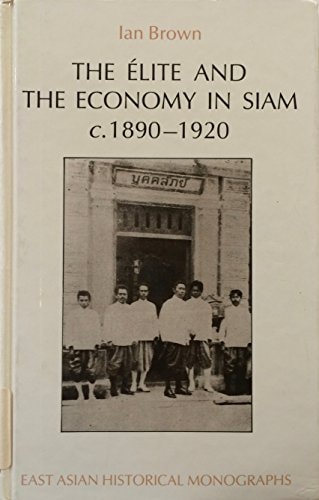
The Elite and the Economy in Siam, c. 1890-1920
0
0
As an Amazon Associate and affiliate partner, Menrva Books earns from qualifying purchases. Learn more
Author Description
Although the Kingdom of Siam never fell under colonial rule, its economic experience in the 19th and early 20th centuries closely paralleled those countries that did. This study examines the principal influences that shaped the Siamese economy in the period 1890-1920, including a detailed analysis of the administrative elite's policy on the diversification of commerce and production, irrigation, agricultural reform, and the extraction of tin and teak. Unlike most recent Thai scholarship, this book focuses on the kingdom's external relations--its open integration into the world economy and its vulnerable geopolitical position in mainland Southeast Asia.
Menrva's Summary
THE THESIS
This study investigates how the Siamese administrative elite navigated the kingdom's integration into the global economy between 1890 and 1920 to maintain sovereignty despite external pressures. Ian I. Brown, a scholar of Southeast Asian economic history, utilizes archival records and administrative documents to analyze the kingdom's development strategies. The book argues that Siam's economic trajectory during this era was defined by a deliberate, state-led effort to modernize commerce, agriculture, and resource extraction while managing a precarious geopolitical position in mainland Southeast Asia.
THE SCOPE MAP
What You Will Find
- Analysis of the administrative elite's policies regarding commerce and production diversification.
- Examination of infrastructure projects including irrigation and agricultural reform.
- Investigation into the extraction and export industries of tin and teak.
- Assessment of Siam's external relations and its integration into the global market.
THE AUTHORITY PERSPECTIVE
Historians and regional specialists recognize this work as a foundational text for understanding the economic modernization of Siam during the late 19th and early 20th centuries. Readers frequently note the academic density of the prose and the author's meticulous use of primary source documentation to support his arguments.
Page Count:
208
Publication Date:
1988-09-15
Publisher:
Oxford University Press
ISBN-10:
0195888774
ISBN-13:
9780195888775
History
Economics
Social Conditions
Thailand economic conditions
Community Tags
Similar Books