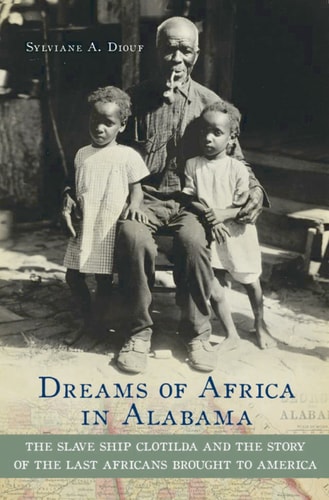
Dreams of Africa in Alabama: The Slave Ship Clotilda and the Story of the Last Africans Brought to America
0
0
As an Amazon Associate and affiliate partner, Menrva Books earns from qualifying purchases. Learn more
Author Description
In the summer of 1860, more than fifty years after the United States legally abolished the international slave trade, 110 men, women, and children from Benin and Nigeria were brought ashore in Alabama under cover of night. They were the last recorded group of Africans deported to the United States as slaves. Timothy Meaher, an established Mobile businessman, sent the slave ship, the Clotilda, to Africa, on a bet that he could "bring a shipful of niggers right into Mobile Bay under the officers' noses." He won the bet. This book reconstructs the lives of the people in West Africa, recounts their capture and passage in the slave pen in Ouidah, and describes their experience of slavery alongside American-born enslaved men and women. After emancipation, the group reunited from various plantations, bought land, and founded their own settlement, known as African Town. They ruled it according to customary African laws, spoke their own regional language and, when giving interviews, insisted that writers use their African names so that their families would know that they were still alive. The last survivor of the Clotilda died in 1935, but African Town is still home to a community of Clotilda descendants. The publication of Dreams of Africa in Alabama marks the 200th anniversary of the abolition of the transatlantic slave trade. Winner of the Wesley-Logan Prize of the American Historical Association (2007)
Menrva's Summary
THE THESIS
This book investigates the historical reality and long-term legacy of the Clotilda, the final ship to transport enslaved Africans to the United States in 1860. Sylviane A. Diouf, an award-winning historian and scholar, utilizes primary source documents, oral histories, and archival records to reconstruct the experiences of the 110 individuals captured in West Africa. The work argues that the survivors maintained a distinct cultural identity and agency, culminating in the establishment of the self-governed settlement known as African Town.
THE SCOPE MAP
What You Will Find
- Detailed account of the 1860 illegal slave voyage from Benin and Nigeria to Alabama.
- Analysis of the social and political climate in Mobile, Alabama, during the mid-19th century.
- Documentation of the founding and governance of African Town by the survivors.
- Examination of the cultural preservation efforts of the Clotilda survivors.
Scope Limits
- The narrative focuses specifically on the Clotilda survivors and does not provide a comprehensive history of the entire transatlantic slave trade.
- The text does not cover the modern-day archaeological recovery efforts of the ship wreckage.
THE AUTHORITY PERSPECTIVE
Historians and critics recognize this work as a definitive account of the Clotilda survivors, praised for its meticulous research and empathetic narrative approach. Scholars frequently cite the text for its contribution to understanding the post-emancipation lives of enslaved people and the formation of unique cultural enclaves in the American South.
Page Count:
368
Publication Date:
2007-01-01
Publisher:
Oxford University Press
ISBN-10:
0190295090
ISBN-13:
9780190295097
History
Biography
Mobile Ala
United States
Slavery
Ethnic Studies
American History
African American
Slave Trade
Social Conditions
Social History
Community Tags
Other Editions(2)
Similar Books