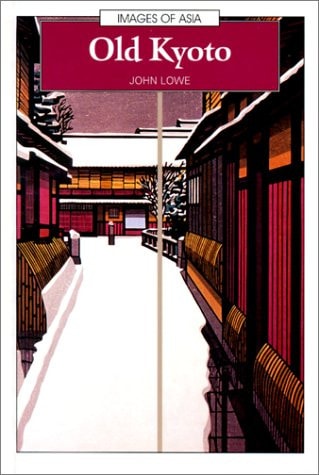
Old Kyoto: A Short Social History
0
0
As an Amazon Associate and affiliate partner, Menrva Books earns from qualifying purchases. Learn more
Author Description
Kyoto, indisputably one of Asia's most fascinating destinations, was also one of Asia's longest-running capitals. From its founding in 794 to its rejection as Japan's capital in favor of Tokyo in 1868, Kyoto harbored and absorbed most of Japan's major cultural, social, and historical shifts.Old Kyoto provides a rich social history of the city throughout its six major eras, starting with the Heian period, when the Emperor reigned supreme over a hierarchical court modeled on that of China. This rigidity gave way to the insular, sensual Fujiwara period, famous in part as the setting for The Tale of Genji, written by one of Kyoto's most famous natives, the novelist Lady Murasaka. As the city grew, so did the power of the warrior class, the Shogunate, supported by their mercenary soldiers, the samurai. By the seventeenth century, Kyoto was presided over by wealthy merchants who spawned the 'floaring world' culture of woodblock prints, Kabuki theater, and the geisha quarters.With its rich variety of illustrations and historical anecdotes, Old Kyoto brings the city to life, providing a delightful companion to this remarkable city.
Menrva's Summary
THE THESIS
This book investigates the social and cultural evolution of Kyoto from its establishment as the imperial capital in 794 to the transition of power to Tokyo in 1868. John Lowe utilizes historical records and cultural analysis to trace the city's transformation through six distinct eras. He argues that Kyoto served as the primary vessel for Japan's major societal shifts, reflecting the changing dynamics between the imperial court, the warrior class, and the merchant population. The text provides a structured framework for understanding how these political transitions influenced the daily life and artistic output of the city's inhabitants.
THE SCOPE MAP
What You Will Find
- A chronological examination of Kyoto's six major historical eras, including the Heian and Fujiwara periods.
- Analysis of the rise and influence of the Shogunate and the samurai class.
- Exploration of the 'floating world' culture, including woodblock prints, Kabuki theater, and the geisha districts.
- Integration of historical anecdotes and visual illustrations to contextualize the city's development.
THE AUTHORITY PERSPECTIVE
Readers frequently note the accessibility of this text for those seeking a concise overview of Kyoto's complex history. Experts highlight the book as a useful introductory resource that effectively balances academic rigor with engaging cultural commentary.
Page Count:
96
Publication Date:
2000-11-26
Publisher:
Oxford University Press
ISBN-10:
0195909402
ISBN-13:
9780195909401
History
Travel
Social History
Japan
Kyoto Japan
Community Tags
Similar Books