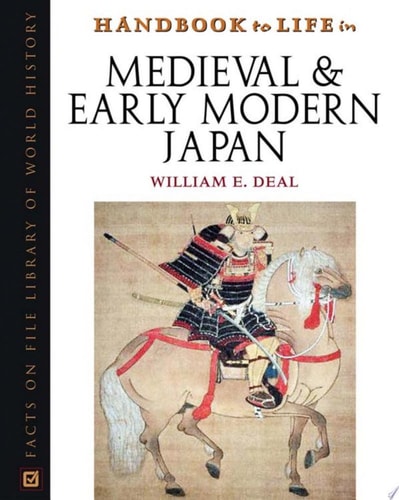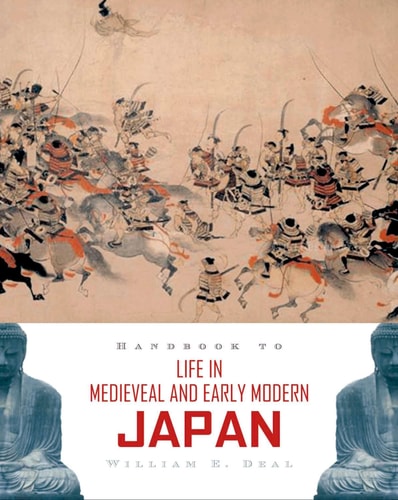
Handbook to Life in Medieval and Early Modern Japan
0
0
As an Amazon Associate and affiliate partner, Menrva Books earns from qualifying purchases. Learn more
Author Description
Handbook to Life in Medieval and Early Modern Japan spans the beginning of the Kamakura period in 1185 through the end of the Edo (Tokugawa) period in 1868. The medieval and early modern eras in Japan were largely shaped by the rise of the warrior class. After 1603, with the founding of the Tokugawa shogunate, Japanese culture changed dramatically, but as cities grew and merchants thrived, the warrior class became less dominant. By the end of the Edo period, Japan's insular feudal society and military government became irrelevant in an increasingly consumer-oriented economy and thriving urban culture.The contribution of military rulers, celebrated warriors, and cultural innovators to medieval and early modern Japanese culture are well documented. However, life at the village level also had a strong impact on the culture. Covering both levels of society, this comprehensive guide provides insightful information on well-known people and peasants, artisans, shopkeepers, and others outside the periphery of power. Handbook to Life in Medieval and Early Modern Japan introduces the reader to the significant people and events-cultural, social, political, and historical-and the everyday experiences and elements of material culture during this time.Organized thematically, the text covers: History; Land, Environment, and Population; Government; Society and Economy; Warriors and Warfare; Religion; Philosophy, Education, and Science; Language and Literature; Performing Arts; Art and Architecture; Travel and Communication; Daily Life. Each chapter includes an extensive bibliography, and photographs and maps complement the text. Handbook to Life in Medieval and Early Modern Japan provides all the essential information for anyone interested in Japanese history, society, or culture.
Menrva's Summary
THE THESIS
This volume investigates the multifaceted evolution of Japanese society, culture, and governance from the inception of the Kamakura period in 1185 through the conclusion of the Edo period in 1868. William E. Deal, a scholar of Japanese history, synthesizes historical data to examine the transition from a warrior-dominated feudal system to a complex, consumer-oriented urban society. The text utilizes a thematic framework to analyze how both the ruling military elite and the common populace shaped the trajectory of the nation during these centuries.
THE SCOPE MAP
What You Will Find
- Comprehensive coverage of historical eras including the Kamakura, Muromachi, and Tokugawa periods.
- Thematic chapters addressing government, religion, philosophy, and material culture.
- Analysis of social stratification, ranging from the warrior class to artisans and peasants.
- Supporting documentation including extensive bibliographies, maps, and photographic evidence.
THE AUTHORITY PERSPECTIVE
Experts and students frequently cite this work as a foundational reference for understanding the structural shifts in pre-modern Japanese society. Readers often note the clarity of the thematic organization, which makes the dense historical data accessible for both academic research and general inquiry.
Page Count:
415
Publication Date:
2007-10-03
Publisher:
Oxford University Press
ISBN-10:
0195331265
ISBN-13:
9780195331264
History
Japan
Reference
Social History