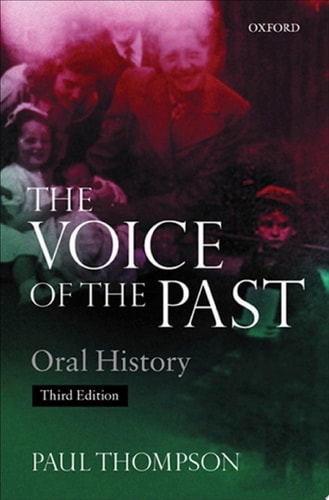
The Voice of the Past: Oral History
0
0
As an Amazon Associate and affiliate partner, Menrva Books earns from qualifying purchases. Learn more
Author Description
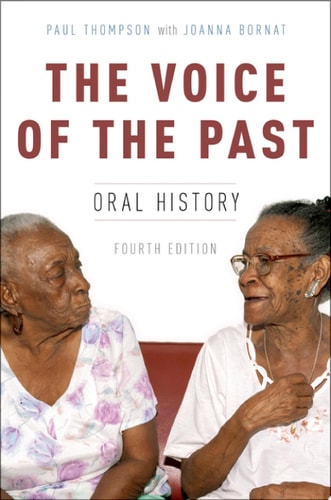
Oral history gives history back to the people in their own words. And in giving a past, it also helps them towards a future of their own making. Oral history and life stories help to create a truer picture of the past and the changing present, documenting the lives and feelings of all kinds of people, many otherwise hidden from history. It explores personal and family relationships and uncovers the secret cultures of work. It connects public and private experience, and it highlights the experiences of migrating between cultures. At the same time it can bring courage to the old, meaning to communities, and contact between generations. Sometimes it can offer a path for healing divided communities and those with traumatic memories. Without it the history and sociology of our time would be poor and narrow. In this fourth edition of his pioneering work, fully revised with Joanna Bornat, Paul Thompson challenges the accepted myths of historical scholarship. He discusses the reliability of oral evidence in comparison with other sources and considers the social context of its development. He looks at the relationship between memory, the self and identity. He traces oral history through its own past and weighs up the recent achievements of a movement which has become international, with notably strong developments in North America, Europe, Australia, Latin America, South Africa and the Far East, despite resistance from more conservative academics. This new edition combines the classic text of The Voice of the Past with many new sections, including especially the worldwide development of different forms of oral history and the parallel memory boom, as well as discussions of theory in oral history and of memory, trauma and reconciliation. It offers a deep social and historical interpretation along with succinct practical advice on designing and carrying out a project, The Voice of the Past remains an invaluable tool for anyone setting out to use oral history and life stories.
Menrva's Summary
THE THESIS
How can oral history serve as a legitimate and transformative methodology for capturing the lived experiences of individuals often excluded from traditional historical narratives? Paul Thompson, a pioneering figure in the field, utilizes his extensive background in sociology and history to argue that oral evidence provides a necessary, nuanced counterpoint to conventional archival records. By integrating personal memory with broader social contexts, the text establishes a framework for documenting the lives of diverse populations while addressing the theoretical and practical challenges inherent in this research approach.
THE SCOPE MAP
What You Will Find
- Theoretical analysis of memory, identity, and the reliability of oral evidence compared to traditional sources.
- Practical guidance on designing, conducting, and interpreting oral history projects.
- Examination of the global development of oral history movements across North America, Europe, and the Global South.
- Discussions on the role of oral history in trauma recovery, community building, and intergenerational connection.
THE AUTHORITY PERSPECTIVE
Experts recognize this work as a foundational text that successfully bridges the gap between academic historical scholarship and community-based research. Readers frequently note the balance between dense theoretical inquiry and accessible, practical advice for practitioners in the field.
Page Count:
0
Publication Date:
1999-01-01
Publisher:
Oxford
ISBN-10:
0195921097
ISBN-13:
9780195921090
History
Sociology
Social Science
Oral History
Community Tags
Other Editions(5)
Similar Books





Reader Comments
Share Your Thoughts
No comments yet. Be the first to share your thoughts!