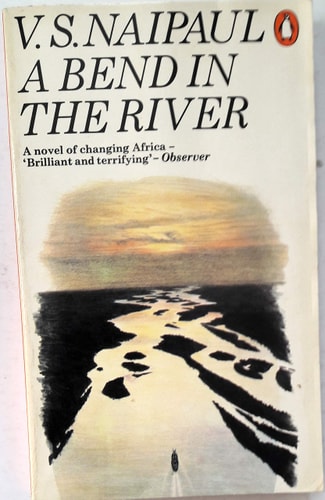
A Bend in the River
0
0
As an Amazon Associate and affiliate partner, Menrva Books earns from qualifying purchases. Learn more
Author Description
This incandescent novel chronicles both an internal journey and a physical trek into the heart of Africa, a place caught between the dangerously alluring modern world and its own tenacious past and traditions. Exploring political and individual corruption, it expresses skepticism about the ability of newly decolonized nations to forge independent identities. Salim, a Muslim Indian merchant, opens a store in a sleepy small town at a bend in the river, whose inhabitants include a Belgian priest, a witch, and a white intellectual named Raymond. The president of the new country is a demagogue called the Big Man who hires Raymond as his speechwriter. Salim loses control of his store to the commercially inexperienced Citizen Theotime, who hires Salim to manage it. Gradually, the town's veneer of civilization begins to crumble.
Menrva's Summary
THE PULSE
Salim, an Indian merchant, attempts to establish a new life in a volatile, newly independent African nation, only to find his personal stability threatened by the encroaching decay of the post-colonial state. Salim moves to a remote town at a bend in the river to operate a store, hoping to distance himself from the political instability of the coast. He encounters a diverse cast of characters, including a Belgian priest and a political intellectual, all while navigating the erratic rule of the nation's leader, known as the Big Man. The narrative, delivered through Salim's observant first-person perspective, tracks the gradual erosion of order as the town succumbs to corruption and administrative incompetence. Salim must contend with the loss of his autonomy as his business is subsumed by the state's shifting power dynamics.
INSIDE THE PAGES
- First-person retrospective narration
- Examination of post-colonial identity
- Atmospheric depiction of a decaying river town
- Exploration of political corruption and demagoguery
- Focus on the clash between tradition and modernity
- Character-driven psychological observation
- Themes of displacement and cultural alienation
- Non-linear reflection on historical change
THE COLLECTIVE ECHO
Readers and critics frequently note the clinical, detached prose style that mirrors the protagonist's own sense of alienation. Discussion often centers on the bleak portrayal of political instability and the inevitable failure of the newly formed state to maintain order. Many highlight the effectiveness of the river setting as a symbol for the relentless, indifferent flow of history. The balance between Salim's internal monologue and the external political chaos is often cited as a primary strength of the work. Critics emphasize the author's skepticism regarding the transition from colonial rule to independence, making it a frequent subject of academic analysis.
Page Count:
288
Publication Date:
1982-01-01
Publisher:
Penguin Books
ISBN-10:
0140052585
ISBN-13:
9780140052589
Literary Fiction
Contemporary
Contemporary Classics
Political fiction
Postcolonial
African
Community Tags
Other Editions(7)





Similar Books










Reader Comments
Share Your Thoughts
No comments yet. Be the first to share your thoughts!